Wet, Wireless, and Wrong: The Fifty-Year Crusade to Pry Toilet Paper from American Hands
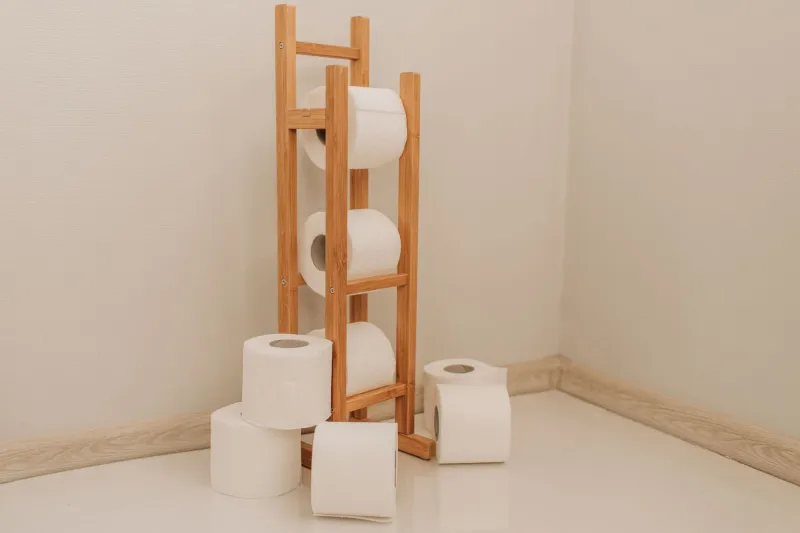
Let us speak plainly about a subject that civilizations have danced around for millennia: what happens after. Specifically, what the sanitary product industry, Japanese electronics engineers, and a rotating cast of hygiene evangelists have spent the last fifty years insisting would happen — which is that Americans would gracefully set down their Charmin and embrace a wetter, supposedly more sophisticated future.
They were wrong. Magnificently, repeatedly, almost heroically wrong. And then, for about three weeks in spring 2020, they were right — though not in any way they ever predicted, and for reasons that would have horrified them.
Enter the Bidet, Stage Left
The first wave of toilet paper doom-saying arrived from Japan in the early 1970s, when Toto Ltd. introduced the Washlet — a heated, water-spraying toilet seat attachment that the Japanese market adopted with the kind of enthusiasm Americans typically reserve for a new iPhone. The product was a genuine engineering marvel. It had adjustable water pressure. It had a warm air dryer. Some later models played music.
American importers were confident. Within a decade, industry analysts predicted throughout the late 1970s and early 1980s, the bidet — in one form or another — would claim a substantial share of the American bathroom market. Europeans already used them. Japan was going wild for electronic variants. Surely the Americans, those great adopters of convenience technology, would follow.
They did not follow. The bidet sat in the corner of upscale hotel bathrooms like a confused relative at Thanksgiving — present, well-intentioned, and largely ignored. By 1990, bidet penetration in American homes hovered somewhere below two percent. The prophets recalibrated and tried again.
The Flushable Wipe Gambit
If Americans wouldn't go full water-jet, perhaps they could be seduced by something that felt more familiar — a moist towelette, dressed up in grown-up packaging and marketed with the clinical authority of a pharmaceutical ad. Enter the flushable wet wipe, which arrived in American drugstores in the late 1990s and early 2000s accompanied by bold promises from its manufacturers.
These were not predictions of modest market share. These were declarations of categorical victory. Kimberly-Clark and its competitors projected that wet wipes would capture fifteen to twenty percent of the toilet paper market within a decade. Consumer research showed that once people tried them, they didn't go back. The future, the industry insisted, was damp.
Two things happened instead. First, Americans bought wet wipes, used them occasionally, and continued buying toilet paper at essentially unchanged rates — deploying the wipes as a supplement rather than a replacement, the way a person might add a side salad while still ordering the burger. Second, and more awkwardly for the manufacturers, the wipes turned out not to be especially flushable. Municipal sewer systems across the country began clogging in ways that made the word "fatberg" enter the public vocabulary. Cities from New York to Raleigh issued increasingly exasperated warnings. The prophets of moist convenience had not accounted for the pipes.
The 2020 Interlude: Accidentally Correct
And then the pandemic arrived, and for one brief, bewildering moment, the toilet paper doomsayers got their apocalypse — just not the one they'd scripted.
In March 2020, American consumers, confronting the psychological terror of an unknown virus and a society shutting down, did what panicked humans have always done: they bought things. Specifically, they bought toilet paper. Every roll. All of them. Warehouse stores were stripped. Grocery shelves gaped emptily. A product that had never meaningfully been scarce in living American memory became the defining symbol of collective anxiety.
For approximately three weeks, toilet paper was genuinely hard to find. The bidet industry — which had spent decades making polite, increasingly desperate arguments about hygiene and environmental impact — suddenly found itself selling out of inventory. Toto's American sales spiked. Tushy, a direct-to-consumer bidet attachment startup that had been grinding away at American bathroom conservatism for years, reported weeks-long shipping delays.
The prophets had been right. There was a toilet paper shortage. Americans did turn to alternatives. But the cause was a global pandemic and mass panic-buying, not any gradual cultural evolution toward superior hygiene habits. It was like predicting the horse would be replaced by the automobile and being vindicated because a horse got spooked and ran away.
Why the Bathroom Is the Last Frontier
Cultural habits are stubborn in inverse proportion to how trivial they appear. Americans switched from horses to cars, from handwritten letters to email, from film cameras to smartphones — but the bathroom routine has proven weirdly, almost defiantly resistant to reinvention. Sociologists who study consumer behavior point to what might be called the "intimacy barrier": the more personal a habit, the more activation energy is required to change it, and few habits are more personal than this one.
There's also the infrastructure problem. Bidets require plumbing modifications that renters can't make and many homeowners won't bother with. Wet wipes require sewage systems that can handle them, which most American systems cannot. The toilet paper industry, meanwhile, has spent a century perfecting its product and its marketing, and it is very good at both.
As of this writing, bidet adoption in American homes has climbed — the pandemic bump was real and some of it stuck — but still sits in the low single-digit percentages. Toilet paper remains a $10 billion annual industry in the United States. The Charmin bears are still dancing. Scott is still promising to last longer.
The Verdict
The sanitary product prophets were not wrong about the technology. Bidets work. Electronic Washlets are, by any objective measure, a more thorough cleaning instrument than dry paper. The environmental case against toilet paper — it requires enormous amounts of water and wood pulp to manufacture — is genuinely compelling.
They were wrong about Americans. They assumed that demonstrable superiority would translate to behavioral change, which is an error that smart people have been making about Americans specifically for the better part of two centuries. We are a nation that kept the penny, still uses the imperial system of measurement, and fills out paper forms at the doctor's office. Did anyone really think we were going to change what we do in the bathroom because a Japanese electronics company had a better idea?
The toilet paper roll endures. The prophets keep predicting. And somewhere in a very nice hotel bathroom, a bidet sits, patient and hopeful, waiting for its moment.