Still Filling Out That Form: Seventy Years of Promises That Medicine Would Go Paperless
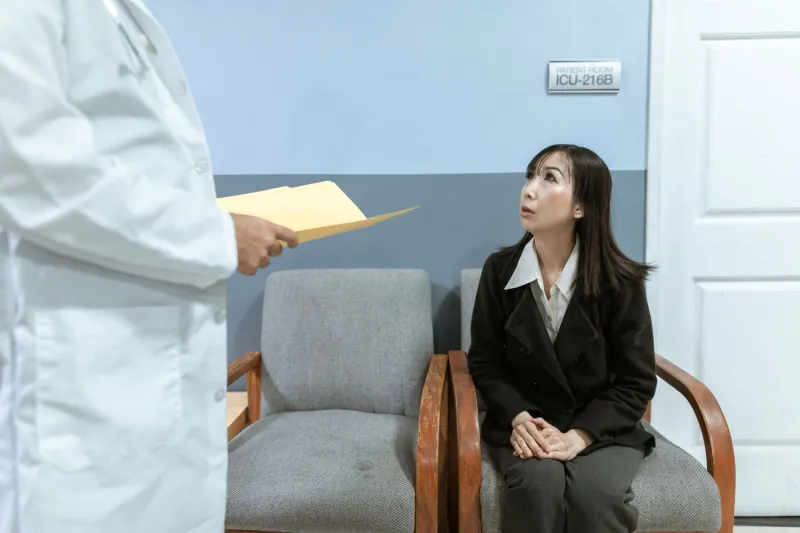
Somewhere in America right now, a person is sitting in a doctor's waiting room, hunched over an iPad, laboriously re-entering their home address, their insurance group number, and the name of every medication they've taken since 2003. The iPad, to be clear, is not saving this information anywhere that will matter. Next Tuesday, at a different office in the same hospital system, they will do it again on paper.
This is the digital revolution in American healthcare. It has been arriving, with great fanfare, for approximately seventy years.
The Oracles of the Operating Room, Circa 1955
The first wave of medical digitization prophets arrived alongside the first wave of mainframe computers, and they were not shy about their ambitions. By the late 1950s, researchers at institutions like Massachusetts General Hospital were already experimenting with computer-assisted diagnosis, and the popular press was ready to go absolutely feral about it. Time magazine and its contemporaries painted vivid pictures of a future in which a patient's complete medical history would exist in a single, instantly accessible electronic file, shared seamlessly between every doctor, hospital, and specialist in the country.
The timeline, as best as historians can reconstruct it, was roughly "within a decade or so."
That decade came and went. The folders stayed.
To be fair, the computers of 1960 were the size of a modest ranch home and cost roughly what a small New England town costs today. The prophets were perhaps getting a little ahead of the hardware. Reasonable people can disagree. What is harder to excuse is that the predictions didn't stop — they simply reset, like a doomsday clock with an optimistic operator.
The 1970s: When Terminals Were Going to Change Everything
By the Nixon administration, a new generation of medical futurists had arrived with fresh confidence and slightly smaller computers. The minicomputer revolution, they announced, meant that electronic health records were now genuinely imminent. Hospitals would be networked. Records would flow. The manila folder was a dead man walking.
What actually happened was that hospitals bought some terminals, connected them to nothing in particular, and continued generating paper at a rate that would have impressed a 19th-century Victorian bureaucrat. The electronic health record of the 1970s largely consisted of a computer that printed out a form for a nurse to fill in by hand.
Progress, technically speaking. But not quite the revolution advertised.
Telemedicine: The Prediction That Has Been Five Years Away Since Ford Was President
No survey of medical digitization prophecy would be complete without a moment of silence for telemedicine, which has been perpetually on the verge of replacing in-person doctor visits since roughly 1975.
The concept was seductive and, in fairness, not entirely wrong. NASA was experimenting with remote medical monitoring for astronauts. Researchers in rural health were genuinely excited about the possibility of connecting patients in underserved communities to specialists hundreds of miles away. By the 1990s, with the internet beginning to feel like a real thing, the predictions crescendoed into something approaching mania.
The doctor's office as we know it will not exist by 2005, announced more than one confident voice in more than one breathless technology magazine. Why would anyone drive to a clinic, sit in a germ-laden waiting room, and flip through a two-year-old issue of People when they could simply video-chat with their physician from the comfort of their couch?
By 2005, the American doctor's office was doing fine, thanks for asking. Telehealth existed, technically, in the same way that electric cars existed in 1910: present, promising, and used by almost nobody.
It took a global pandemic — an event the futurists somehow failed to include in their optimistic timelines — to finally push telemedicine into widespread adoption. And even then, the first thing most telehealth platforms asked you to do was upload a photo of your insurance card.
The Electronic Health Record: A Love Story in Several Disappointing Acts
The 21st century brought the most serious attempt yet to drag American medicine into the digital age. The Health Information Technology for Economic and Clinical Health Act of 2009 effectively bribed hospitals and physician practices with billions of dollars to adopt electronic health records. This was, by any measure, a significant policy achievement.
It was also, by many measures, a spectacular illustration of how solving one problem can create seventeen new ones.
Hospitals adopted EHR systems. Doctors hated them with a passion previously reserved for malpractice attorneys. Studies began accumulating, with grim efficiency, documenting the hours physicians now spent staring at screens instead of patients. Nurses developed elaborate workarounds. Competing systems refused to communicate with one another, because nothing in American healthcare is allowed to be simple.
And the patient, sitting in the waiting room, was handed an iPad.
The iPad contained a form. The form asked for the patient's address, insurance information, medical history, current medications, and the name of their emergency contact. The patient filled it out. The information was entered into the system.
At the specialist's office across town, operating on a different EHR platform purchased from a different vendor, none of this information was available. The patient was handed a clipboard.
What the Prophets Got Right (Sort Of)
Here is where intellectual honesty requires us to pump the brakes slightly on the mockery. The prophets were not entirely wrong. They were wrong about the timeline, wrong about the smoothness of the transition, and spectacularly wrong about how much physicians would enjoy clicking through seventeen dropdown menus to document a sinus infection. But the underlying vision — that digital technology would transform medicine — was not delusional.
MRI machines are guided by software. Genomic sequencing has rewritten oncology. Wearable devices monitor heart rhythms in real time and have, by documented accounts, saved lives. The pandemic-era telemedicine surge, however awkwardly implemented, genuinely expanded access to care for millions of Americans who had previously struggled to see a doctor at all.
The future arrived. It just arrived wearing wrinkled clothes, three hours late, and immediately asked you to create a new password.
The Moral of the Clipboard
Seventy years of medical digitization prophecy teaches us something important, and it is not that the prophets were stupid. Many of them were brilliant. What they consistently underestimated was not the technology but the system: the Byzantine tangle of insurance incentives, liability concerns, vendor competition, regulatory requirements, and sheer institutional inertia that makes American healthcare resistant to change in ways that make a glacier look impulsive.
The paperless doctor's office was always possible. It remains, in many respects, still possible. It just turns out that possibility and inevitability are different things, a distinction that has humbled visionaries in this particular field for going on eight decades.
In the meantime, the waiting room iPad thanks you for your patience. Please sign here to confirm that your address is the same address you provided six minutes ago on the paper form.
Your doctor will be with you shortly.