The Permanent Yawn: How America's Sleep Prophets Have Been Predicting Collapse Since Eisenhower
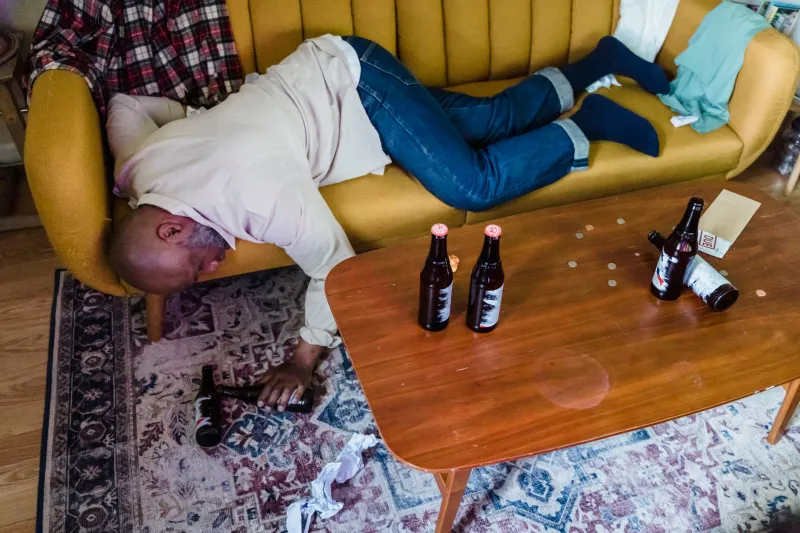
At some point in the last seventy years, a researcher sat down, calculated how many hours the average American was sleeping, compared that number to some theoretical ideal, and concluded that the nation was in serious trouble. This researcher then published a paper, gave an interview, and warned anyone who would listen that we were sleepwalking toward catastrophe.
This happened in 1955. It happened in 1967. It happened in 1979, 1988, 1994, 2003, 2011, and approximately every eighteen months since. The catastrophe, for its part, has been an absolute no-show.
Welcome to America's longest-running wellness panic, a seventy-year-old prediction machine that has never once been right about the timing and has never once stopped trying.
The Founding Prophets of Fatigue
The modern American sleep crisis, as a concept, was essentially invented in the postwar era, when researchers began applying scientific rigor to something humans had been doing instinctively since before they had the brainpower to be anxious about it.
The early studies were genuinely interesting. Sleep deprivation, it turned out, did bad things to human cognition, mood, and physical health. Nobody who had ever pulled an all-nighter before a chemistry exam found this surprising, but it was useful to have the data. The problem began when researchers, journalists, and the emerging wellness industry took this legitimate finding and extrapolated it into something considerably more dramatic.
By the early 1960s, popular magazines were warning that the pressures of modern industrial life — the commute, the television, the electric light — were systematically stealing Americans' sleep and would eventually exact a terrible biological toll. The specific toll was always described as imminent. The timeline was always vague enough to be unfalsifiable.
This, as we will see, became something of a tradition.
The 1970s: When Stress Was Going to Kill Us All in Our Beds
The 1970s added a new ingredient to the sleep panic: stress. The decade had, in fairness, some legitimate stressors. Stagflation, Watergate, two oil crises, and a general cultural sense that the postwar optimism had curdled into something considerably less cheerful gave researchers plenty of material.
Sleep scientists of the era warned that the chronic stress of modern American life was fundamentally incompatible with restorative sleep. A nation of insomniacs was being created. Productivity would suffer. Health would deteriorate. The American worker, perpetually exhausted and cognitively compromised, would be unable to compete with better-rested rivals — a warning that would be recycled, with Japan swapped in for the Soviet Union, about fifteen years later.
The American worker responded by watching Johnny Carson until 11:30 and going to bed.
The 1980s: Now With Added Productivity Guilt
The Reagan era brought a new and particularly insidious twist to the sleep panic: the suggestion that sleeping too much was itself a moral failing. The decade that celebrated the 80-hour work week and coined the phrase "I'll sleep when I'm dead" created a strange double anxiety.
On one hand, sleep researchers continued warning that Americans weren't sleeping enough. On the other hand, a significant chunk of American business culture was actively celebrating sleeplessness as a badge of ambition. The prophets of exhaustion were competing, at full volume, with prophets of hustle, and the American public was caught in the middle, feeling guilty regardless of what time they went to bed.
Somewhere in this decade, the first serious predictions emerged that chronic sleep deprivation would produce a measurable decline in American economic output within a generation. That generation has now come and gone. Economic output, whatever its other problems, did not visibly collapse from yawning.
The Internet Era: Infinite Content, Infinite Doom
If the television worried the sleep prophets of the 1960s, the internet sent them into full eschatological mode. Beginning in the late 1990s and accelerating through the 2000s, researchers and commentators began warning that the combination of glowing screens, 24-hour news cycles, social media, and on-demand entertainment had created conditions uniquely hostile to human sleep.
They were not, to be honest, entirely wrong about the mechanism. Blue light from screens does suppress melatonin. Doomscrolling at midnight does not optimize one's circadian rhythm. The Netflix autoplay feature was not designed with sleep hygiene in mind.
But the predictions went well beyond "this might make it harder to fall asleep." By the early 2010s, a minor industry of books, TED talks, and magazine features was warning that America was facing a sleep deprivation epidemic of crisis proportions. Arianna Huffington wrote a book about it. Matthew Walker wrote a considerably more alarming book about it. Both books sold extremely well to people who, one assumes, stayed up past their bedtime reading them.
The crisis-level predictions were specific: productivity losses in the hundreds of billions of dollars, surging rates of obesity and diabetes attributable directly to sleep deprivation, and a general unraveling of cognitive function across the population. Some of these correlations were real. The causal arrows were considerably messier than the headlines suggested, a distinction that has never significantly slowed a wellness panic.
What the Data Actually Shows (It's Complicated, Obviously)
Here is where the story gets genuinely interesting rather than simply funny. The sleep researchers were not making things up. Sleep deprivation is real, its effects are real, and there is legitimate evidence that many Americans are not getting optimal rest. The CDC has identified insufficient sleep as a public health concern, and that designation is not handed out frivolously.
But "a real problem affecting a significant number of people" and "an imminent civilizational catastrophe" are different claims, and the prophets have consistently made the second one while the evidence supported only the first. Average American sleep duration has declined modestly over the decades, not precipitously. The apocalyptic tipping point — the moment when the accumulated sleep debt would finally bring the whole edifice crashing down — has failed to materialize in any of the years it was scheduled to arrive.
Meanwhile, the sleep tracking industry has boomed, selling Americans devices that monitor their slumber with scientific precision and then present them with data that makes them anxious, which presumably does not help them sleep.
The Prophecy That Keeps Hitting Snooze
There is something almost poignant about the sleep crisis prediction, because unlike some entries in the annals of failed forecasting, it comes from a place of genuine concern. The researchers who have spent careers studying sleep are not charlatans. The wellness writers who popularized their findings were not simply manufacturing panic for profit — or at least, not entirely.
The problem is a familiar one in the history of prediction: taking a real trend, projecting it forward in a straight line, and assuming the worst possible outcome is the inevitable one. Americans are sleeping somewhat less than they did in 1950. This is true. That this would produce a cascading biological catastrophe within a generation or two has been predicted so many times, by so many credentialed people, that one almost feels bad pointing out that it hasn't happened yet.
Almost.
The sleep prophets will be back. The next study is always just around the corner, the next alarming statistic always freshly calculated. And somewhere in America, someone is reading about the coming sleep crisis on their phone at 12:47 in the morning, thinking they really should go to bed, and deciding to read just one more article first.
The catastrophe will be here any minute now. Try not to nod off while you're waiting.