When a Nobel Laureate Decided Orange Juice Was the Answer to Everything
Let us begin with a fact that makes everything else in this story more complicated: Linus Pauling was genuinely, indisputably brilliant. He won the Nobel Prize in Chemistry in 1954 for his work on the nature of chemical bonds — foundational stuff, the kind of science that gets cited for generations. He then won the Nobel Peace Prize in 1962 for his antinuclear activism, making him one of only four people in history to win two Nobel Prizes and the only person to win two unshared ones.
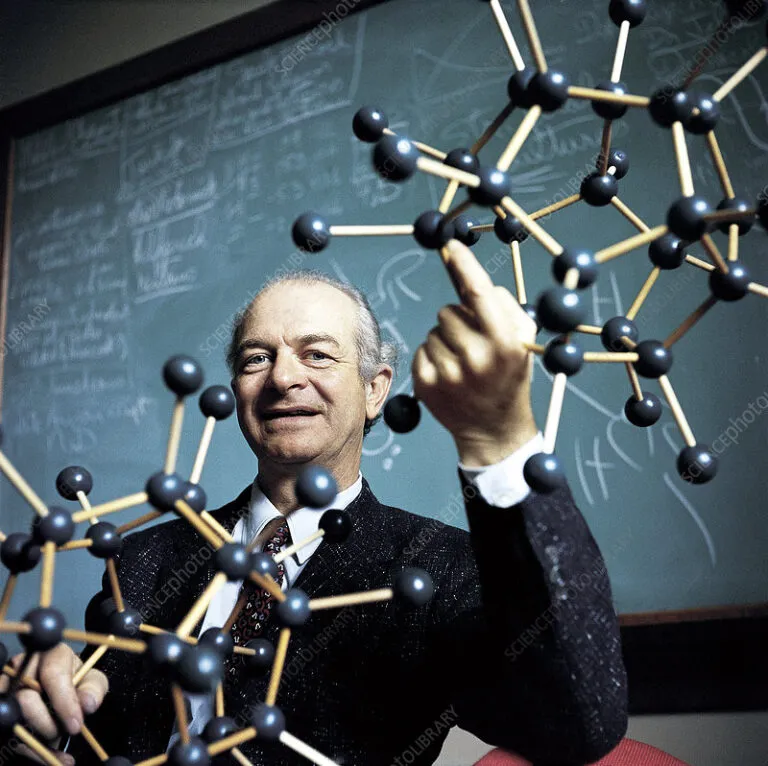 Photo: Linus Pauling, via beyondsciencelabs.com
This is relevant context for what follows, because what follows involves a man of this stature becoming the world's most credentialed evangelist for drinking enormous quantities of orange juice as a defense against human frailty in all its forms.
The Pill That Launched a Thousand Supplement Aisles
Pauling's Vitamin C crusade began in earnest with his 1970 book, Vitamin C and the Common Cold, in which he argued that megadoses of ascorbic acid — we're talking grams per day, not the milligrams your doctor recommends — could dramatically reduce the frequency and severity of colds. The book was a sensation. It sold hundreds of thousands of copies. It was accessible, confident, and written by a man with two Nobel Prizes on his mantle, which tends to move units.
The American public, which has always maintained a complicated relationship with conventional medicine and an enduring faith in the idea that the cure for everything is probably something simple that doctors are too complicated to notice, received the news enthusiastically. Vitamin C sales spiked. The supplement industry, then a relatively modest operation, began to understand its potential.
Pauling himself was reportedly taking 18,000 milligrams of Vitamin C daily, which is approximately 300 times the recommended daily allowance. He was also, to be fair, quite healthy for a man of his age, which he credited to the Vitamin C and which the rest of the medical establishment credited to genetics, good fortune, and the general inscrutability of human biology.
Escalation: From Colds to Cancer
If megadose Vitamin C could defeat the common cold, why stop there? Pauling didn't. By the mid-1970s, he had partnered with Scottish physician Ewan Cameron to investigate whether high-dose Vitamin C could treat cancer. Their 1976 paper reported that terminal cancer patients treated with 10 grams of Vitamin C daily lived significantly longer than untreated controls.
This was extraordinary news, if true. Cancer researchers at the Mayo Clinic decided to find out if it was true, running two randomized controlled trials in the late 1970s and early 1980s. Their results were unambiguous: the Vitamin C effect did not replicate. Patients receiving high-dose Vitamin C showed no significant improvement over controls.
 Photo: Mayo Clinic, via www.metalocus.es
Pauling rejected the Mayo Clinic findings with a ferocity that suggested the Nobel laureate had perhaps developed a personal investment in his hypothesis. He argued the studies were methodologically flawed. He accused the researchers of bad faith. He doubled down on the cancer claims in subsequent books, including the magnificently titled Cancer and Vitamin C (1979) and How to Live Longer and Feel Better (1986).
The medical establishment, which had been politely skeptical, became considerably less polite.
The Supplement Industry's Luckiest Day
While the scientists were arguing, the supplement industry was building an empire. Pauling's books had accomplished something that decades of health food advocacy had not: they had given vitamin supplementation a veneer of serious scientific credibility, delivered by a man whose credentials were beyond dispute even if his specific claims were not.
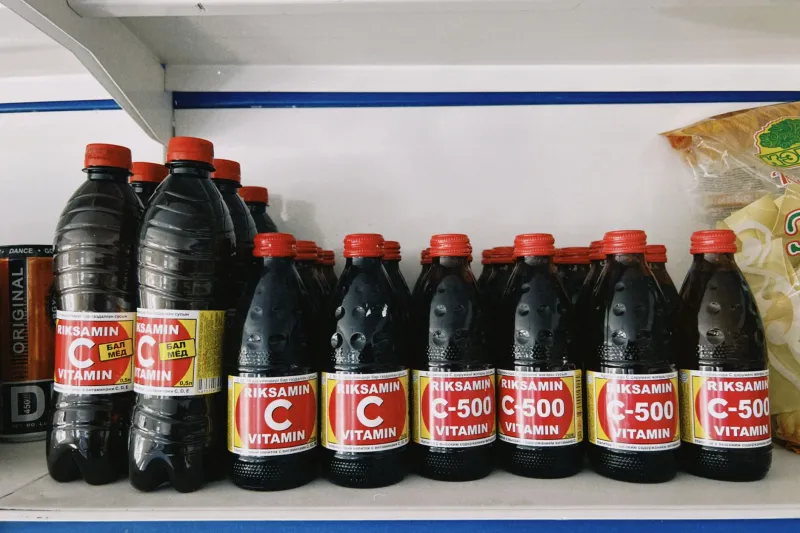
Health food stores, which had previously occupied a fringe cultural position somewhere between the organic co-op and the herbalist's back room, began moving to main streets. Vitamin C in particular became a staple purchase for millions of Americans who couldn't quite follow the biochemistry but understood the pitch: more of this thing is better, and a Nobel Prize winner says so.
By the 1980s, Americans were spending hundreds of millions of dollars annually on Vitamin C supplements alone. By the 1990s, the broader supplement industry had grown into a multi-billion-dollar enterprise. The Dietary Supplement Health and Education Act of 1994, which significantly loosened FDA oversight of supplements, helped it grow further still.
Pauling had not intended to found an industry. He had intended to cure disease. But the industry was a more durable legacy than the cures.
What the Research Actually Found
The scientific verdict on megadose Vitamin C has been arriving slowly and without drama for about forty years, and it is not what Pauling hoped. Extensive research has established that Vitamin C supplementation does essentially nothing to prevent colds in the general population, though it may modestly reduce duration in people under significant physical stress — marathon runners, Arctic explorers, that sort of thing. The cancer results have been similarly underwhelming, with some interesting findings around intravenous administration that remain under investigation but nothing approaching the sweeping claims of the 1970s.
Vitamin C is genuinely essential — scurvy is a real and terrible disease, and the sailors who died of it in the Age of Exploration would have been delighted by the modern supplement aisle. The recommended daily allowance exists for good reasons. What the evidence does not support is the idea that taking fifty times the recommended amount produces fifty times the benefit, which turns out to be not how biology works.
Pauling, who lived to 93 and died of prostate cancer in 1994, never substantially revised his position. He was taking megadoses of Vitamin C until the end.
The Prophet's Complicated Legacy
Here is the uncomfortable part: Pauling wasn't entirely wrong about everything. His early work on Vitamin C and colds contained genuine insights about the relationship between nutrition and immune function. His cancer research, methodologically flawed as the Mayo Clinic argued, helped open avenues of investigation that researchers are still pursuing. The dismissive certainty with which mainstream medicine rejected his ideas in the 1970s was not always more scientifically rigorous than the certainty with which he advanced them.
But the gap between "there's something interesting here worth studying" and "take eighteen grams daily and cure your cancer" is enormous, and Pauling leaped across it on the strength of a Nobel Prize and a compelling hunch. The lesson is not that Nobel laureates are wrong — they're often right, spectacularly right, about the things they won their prizes for. The lesson is that expertise in one domain is not a universal passport.
The supplement aisle that Pauling built, stocked with promises that exceed evidence by varying margins, is now worth tens of billions of dollars annually. The common cold remains uncured. The orange juice people are still doing fine.
The prophets were wrong, mostly. In Pauling's case, brilliantly, expensively, and with the best of intentions.