One Pill to Feed Them All: The Glorious, Misguided War on Actual Food
Food has always been a problem for optimists. It spoils. It requires preparation. It comes in irregular shapes. It demands that you sit down and experience it, which takes time that could theoretically be spent on something more productive. And so, with the reliable ambition of people who have never truly thought about what they would miss, a series of visionaries throughout the twentieth century set out to solve food by eliminating it.
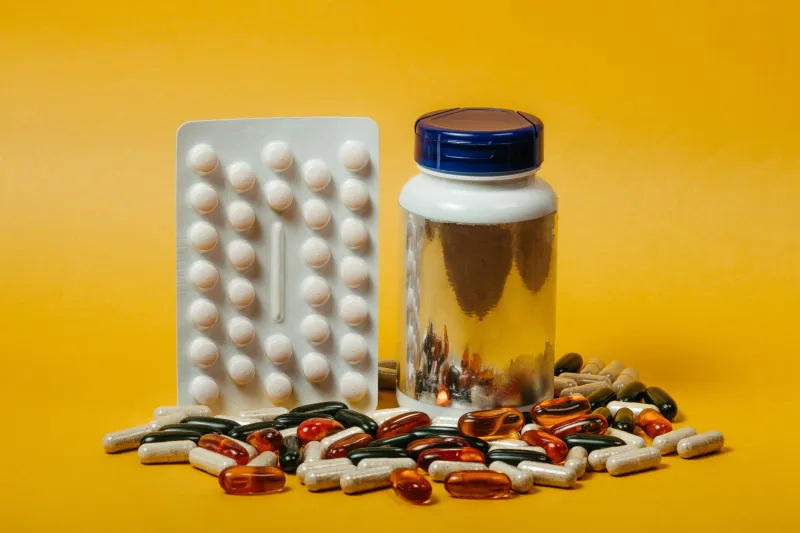
The solution, they agreed, was a pill. One pill, possibly two, delivering everything the human body needed in a form that required no refrigeration, no cooking, no dishes, and no unpleasant negotiations with a picky five-year-old about finishing their vegetables.
This did not happen. But the attempt was magnificent.
The Postwar Laboratory Imagines Dinner
The intellectual roots of the everything-pill fantasy stretch back to the nineteenth century, but it was the postwar era that gave it genuine institutional momentum. The 1940s and 1950s represented the high-water mark of American faith in chemistry's ability to improve on nature, and nutrition was not exempt from this enthusiasm.
Vitamins, isolated and synthesized throughout the 1930s and 1940s, seemed to confirm the thesis: the active ingredients in food could be identified, extracted, and delivered in concentrated form. If scientists could put vitamin C in a tablet, the logic went, surely the rest of the nutritional periodic table was just a matter of time and laboratory patience.
The Journal of the American Medical Association and popular science magazines alike ran optimistic dispatches from the frontier of nutritional chemistry. By 1960, some researchers were suggesting that within a generation, the concept of the meal might be voluntary rather than necessary — something people did for pleasure or social ritual, not because their bodies required it.
 Photo: Journal of the American Medical Association, via 1.bp.blogspot.com
The World's Fair circuit — those magnificent temples of tomorrow that mid-century Americans attended in enormous numbers — was particularly enthusiastic about the food-replacement future. Exhibits promised visitors a world in which a morning handful of tablets would deliver the nutritional equivalent of a full breakfast, liberating housewives from the kitchen and office workers from the lunch break.
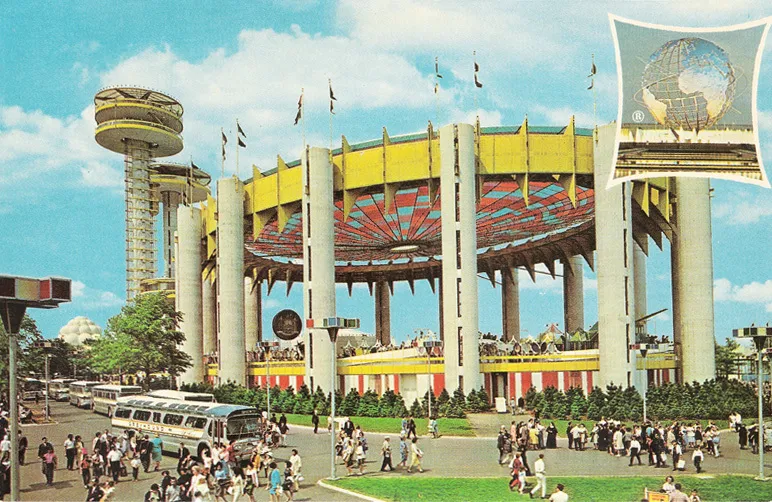 Photo: World's Fair, via images.adsttc.com
The Space Program Made It Seem Plausible
Nothing turbocharged the pill-food fantasy quite like the space race. NASA's genuine, practical need to deliver nutrition to astronauts in zero gravity — where loose crumbs could damage equipment and traditional meals were logistically nightmarish — produced a burst of food-engineering innovation that the popular press interpreted as a preview of everyone's future diet.
Freeze-dried food, food in tubes, food compressed into cubes — all of it was covered breathlessly as the cuisine of tomorrow. If astronauts could survive and perform on engineered nutrition, why couldn't earthbound Americans? The implicit answer, which nobody seemed to dwell on, was that the astronauts were mostly miserable about the food and dreamed constantly of real meals. But this detail was not prominently featured in the World's Fair exhibits.
By the mid-1960s, the prediction had become specific enough to be falsifiable: within twenty years, perhaps thirty, the American dinner table would be supplemented and eventually replaced by pharmaceutical nutrition. The year 2000 was a popular target. Surely, by the turn of the millennium, we would have cracked the code.
The Pill Arrived. Food Did Not Leave.
Here is what actually happened: the supplement industry exploded, and food got more elaborate.
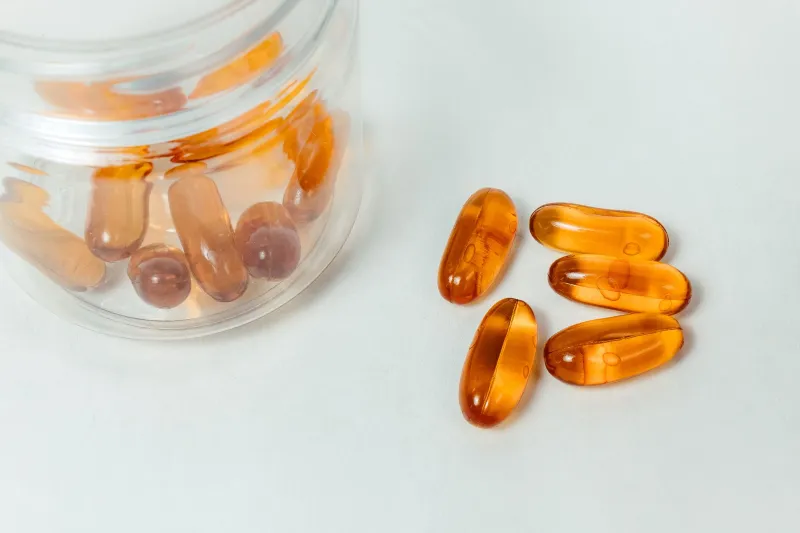
Americans did, in fact, begin consuming vitamins and supplements in enormous quantities. By the 1980s, the multivitamin had become a daily ritual for millions of households. By the 2000s, the supplement aisle at any given pharmacy had expanded to include not just vitamins and minerals but antioxidants, probiotics, adaptogens, nootropics, and an expanding galaxy of compounds with names that sounded vaguely scientific and purposes that were often vaguely defined.
The Global Wellness Institute estimates that Americans now spend approximately $50 billion per year on dietary supplements. This is an extraordinary number. It is also, from the perspective of the pill-food prophets, a partial vindication — Americans are, in fact, taking an enormous number of pills related to nutrition.
They are also eating more food than ever. More diverse food. More restaurant food. More food television. More food podcasts. More food culture, food tourism, food identity, and food as social media content. The supplement industry did not replace the food industry. It joined it, and together they became larger than either would have been alone.
The Nutritionists' Inconvenient Discovery
As the supplement industry boomed, nutritional science was quietly making a discovery that proved awkward for the everything-pill thesis: isolated nutrients, delivered in pill form, frequently did not produce the same health effects as the same nutrients consumed as part of actual food.
Beta-carotene supplements, for instance, which should logically have delivered the same benefits as eating carrots, turned out in some studies to increase cancer risk in smokers rather than reduce it. Vitamin E supplements, heralded as antioxidant miracles, failed in clinical trials to prevent the heart disease they were supposed to prevent. The pattern repeated across multiple nutrients: the supplement worked differently than the food, and often not as well.
The emerging explanation — that food's benefits derived from complex interactions between thousands of compounds that couldn't be easily isolated and bottled — was not what the pill-food prophets had anticipated. It suggested that food's messiness, its irreducible complexity, was not a bug to be engineered out but a feature that science had not yet fully mapped.
This finding did not noticeably slow supplement sales.
The Meal Replacement Tries Again
The everything-pill dream has never entirely died. It simply keeps reincarnating in new forms. The 2010s produced Soylent, a meal-replacement beverage created by a software engineer who found cooking inefficient and wanted to treat nutrition as a systems problem. It attracted significant venture capital, enthusiastic tech-press coverage, and a devoted user base of people who genuinely did not want to think about food.
It also attracted a wave of coverage noting that the product was named after a 1970s science fiction film about a dystopia in which the food supply had collapsed. The founders maintained this was a joke. The cultural resonance was probably unintentional.
Soylent still exists. So does dinner. The contest, at this point, appears to have been decided.
What the Prophets Missed
The pill-food visionaries made a mistake that futurists make with some regularity: they identified a genuine inefficiency in human behavior, correctly engineered a solution to that inefficiency, and then discovered that humans did not actually want the inefficiency solved.
Food is slow, complicated, perishable, and social. It requires attention and effort. It is also, for the overwhelming majority of human beings, one of the primary daily sources of pleasure, connection, and cultural identity. The thing the prophets were trying to engineer out of the American diet was not a bug. It was the point.
Americans take their supplements. They wash them down with coffee. Then they spend twenty minutes deciding where to go for brunch.
The pill never had a chance.