The Couch Potato Who Was Supposed to Save the American City

Let us take a moment to appreciate the sheer optimistic audacity of the following prediction, offered in various forms by urban sociologists throughout the 1950s and 1960s: that television, by bringing the cultural riches of the city into the living room, would make the American suburb redundant, reversing the postwar exodus and repopulating the walkable urban core with grateful, enlightened former commuters.
This did not happen. What happened instead was the strip mall. And then the big-box store. And then the second big-box store, slightly larger, across the street from the first one.
The raccoons are still waiting for their cul-de-sac inheritance.
The Theory, Which Seemed Reasonable at the Time
To be fair to the social scientists of the postwar era, the logic was not entirely insane. The premise went something like this: Americans had moved to the suburbs primarily in search of space and safety, but they had sacrificed access to the cultural and social amenities that made city life stimulating. Theater, museums, restaurants, professional sports — these things required proximity to an urban center, which meant the suburbs were always a compromise.
Enter television. If a family in Levittown could watch The Ed Sullivan Show in their living room, attend a Metropolitan Opera broadcast on PBS, and follow their baseball team without driving forty minutes into the city — well, why stay in the suburbs at all? The city's unique selling proposition was its density of experience. Television, the theory went, would democratize that experience and render geographic proximity unnecessary.
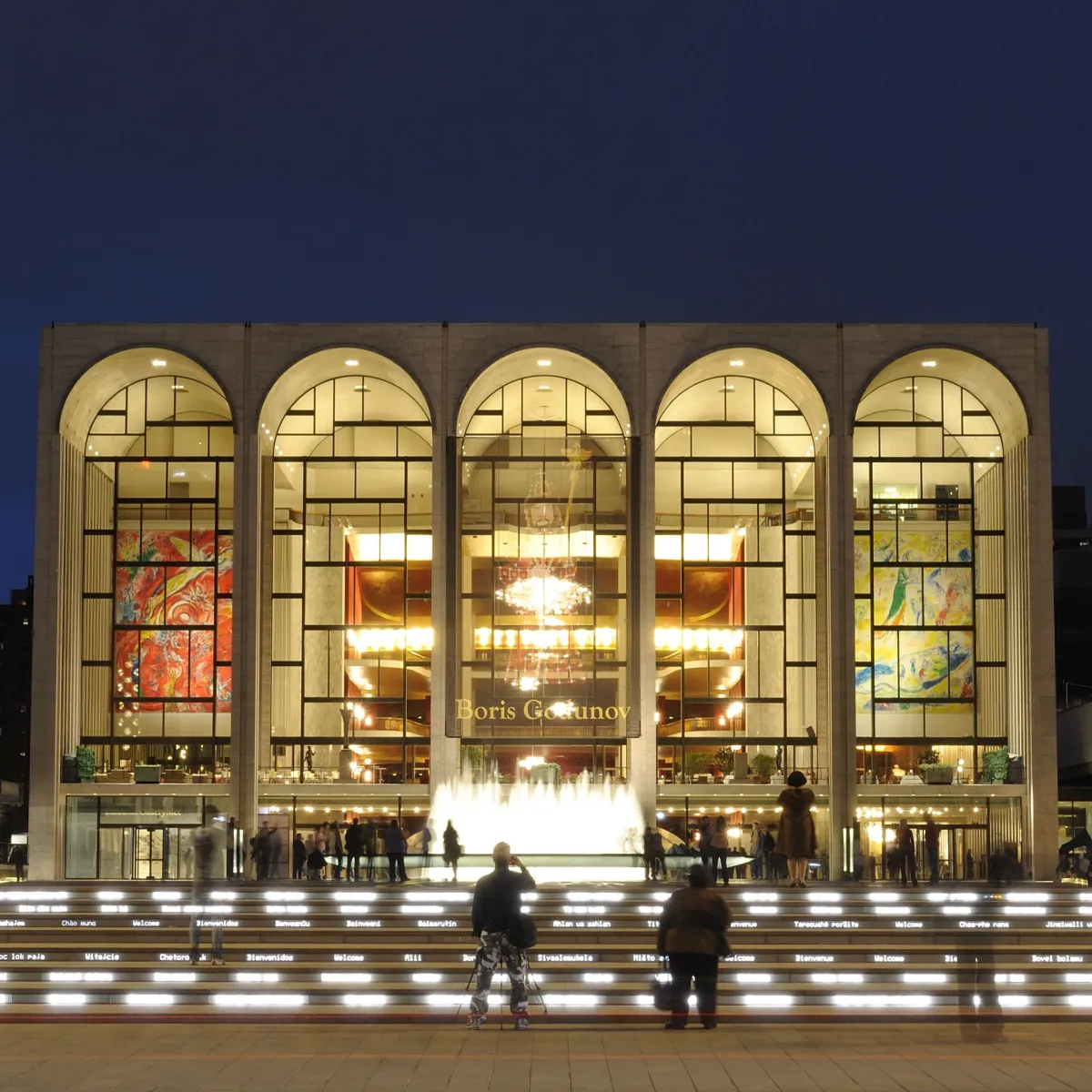 Photo: Metropolitan Opera, via media.architecturaldigest.com
Furthermore, the sociologists reasoned, once the cultural magnet weakened, the practical disadvantages of suburban life — the car dependency, the social isolation, the aesthetic monotony of identical ranch houses — would reassert themselves. Americans would rediscover the pleasures of walking to a corner deli, nodding to neighbors on a stoop, and accessing everything they needed within a quarter-mile radius.
It was, in retrospect, a theory constructed entirely by people who had never met a garage.
What Television Actually Did to the Suburbs
Television did not make the suburb feel inadequate. Television made the suburb feel complete.
Rather than serving as a reminder of everything the cul-de-sac lacked, the television set became the centerpiece of a new suburban lifestyle that required no urban supplement whatsoever. The living room was redesigned around it. Dinner schedules were adjusted to accommodate it. The entire concept of prime time was essentially a new civic ritual, a shared national experience that happened simultaneously in ranch houses from Connecticut to California without anyone needing to leave their driveway.
Far from making the suburb feel like a cultural backwater, television made it feel like the main stage. You weren't missing the Ed Sullivan Show because you lived in Naperville. You were watching it simultaneously with everyone else in America, including the people who lived in Manhattan and had to watch it in much smaller apartments.
The sociologists had assumed that cultural access was a zero-sum competition that favored urban density. They had not accounted for the possibility that Americans would simply redefine culture as whatever was on channel four.
The Suburban Infrastructure Boom Nobody Predicted
Meanwhile, as the prophets of urban renaissance waited for the great return migration, suburban America was busy building things. Highways. Shopping centers. Then malls — those magnificent climate-controlled monuments to the proposition that you could have everything you needed without going anywhere interesting to get it.
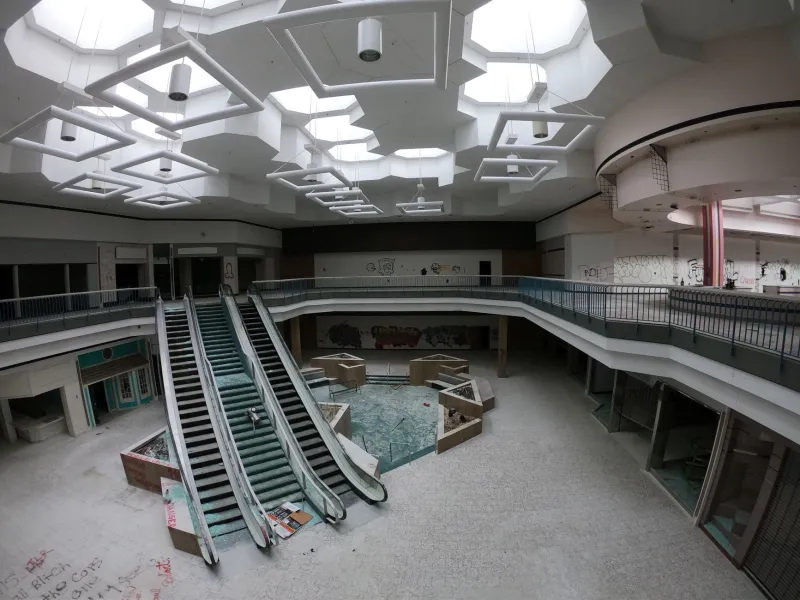
The mall was, in a sense, the physical embodiment of the prediction's failure. It was the city, stripped of everything inconvenient about the city — the weather, the strangers, the historical accident of organic street layouts — and rebuilt from scratch in a parking lot. It had department stores, restaurants, movie theaters, and eventually arcades. It was walkable, but only within itself. It was urban, but only in the most theoretical sense.
And Americans loved it. They drove to it, parked for free, and spent entire Saturdays inside it. The urban theorists who had predicted a return to the walkable city watched Americans walk enthusiastically through the Sears to the food court and despaired.
The Experts Double Down, Then Pivot
The persistence of suburban growth through the 1960s, 1970s, and 1980s did not immediately silence the urban revivalists. Instead, a new generation of theorists updated the prediction for each successive technology. Cable television, with its hundred-channel abundance, was surely going to make the suburb feel provincial. The VCR would do it. Then the home computer. Then the internet.
Each new technology was recast as the tool that would finally, definitively, tip the balance back toward urban living by making remote existence culturally untenable. Each time, Americans responded by streaming the content in question from a larger screen in a house with a two-car garage and a yard.
The smart home was supposed to make suburban isolation feel dystopian. Instead, it made it feel efficient.
The Twist Ending Nobody Saw Coming
Here is where the story gets genuinely complicated, because the prediction was not entirely wrong — it was just about fifty years early and required a global pandemic to partially activate.
The rise of remote work, accelerated dramatically by COVID-19, did produce something resembling what the mid-century sociologists had imagined: a partial decoupling of where people lived from where they worked. And what did Americans do with this newfound geographic freedom? Many of them moved to... the suburbs. Or to smaller cities. Or to places with larger yards and lower costs of living.
The technology that was supposed to draw people back to urban cores instead gave them permission to move further away from them. The prophets had correctly identified that technology would dissolve the relationship between residence and workplace. They had simply assumed that Americans, freed from that constraint, would choose density.
Americans chose the yard.
The raccoons, at least, are doing very well.