The Mall Is Dead! Long Live the Mall! A Fifty-Year Obituary That Keeps Getting Rewritten
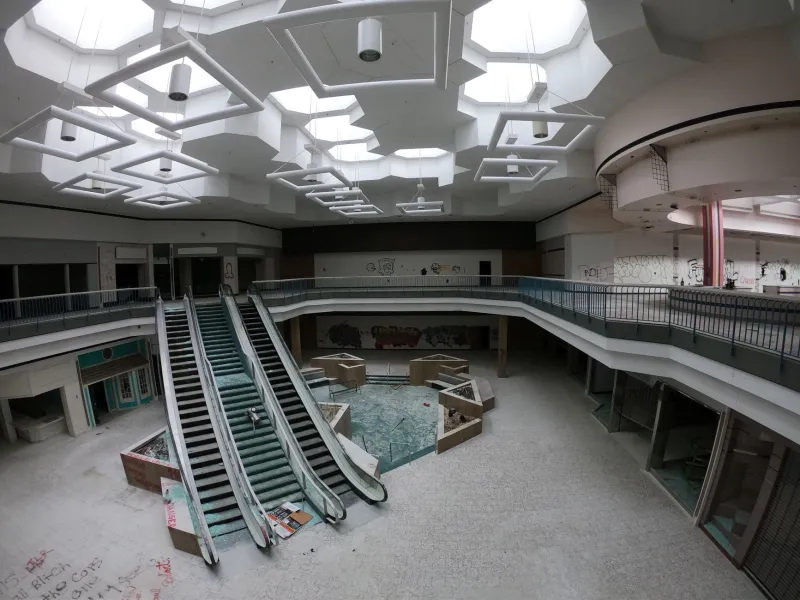
The American shopping mall has now been dying, officially, for approximately half a century. It has been killed by the Sears catalog, cable television, CD-ROM retail kiosks, dial-up e-commerce, broadband e-commerce, smartphones, and a streaming service that turned its corpse into a Netflix documentary. It has been eulogized by urban planners, retail analysts, technology evangelists, and at least three generations of journalists who found the 'death of the mall' story irresistible.
And yet, for most of that time, the mall just kept selling Auntie Anne's pretzels and overpriced jeans to teenagers with nowhere better to be.
This is the story of the most patient patient in retail history — and of the prophets who kept writing the death certificate a few decades too early.
The Catalog Killers (1970s Edition)
Let us begin at the beginning, which is to say, in a decade of earth tones and profound national uncertainty. The 1970s produced the first wave of serious mall-death prophecy, and the weapon of choice was the home shopping catalog.
Futurists and retail analysts of the era looked at the Sears Wishbook — that annual doorstop of consumer desire — and extrapolated forward. Why would anyone drive to a mall, find parking, navigate crowds, and interact with other humans when a catalog could bring the store to your living room? Interactive television shopping was just around the corner. Two-way cable systems were being tested in Columbus, Ohio. The technology was almost there.
Almost there is, as we will see repeatedly in this story, the two most expensive words in the history of prediction.
The malls of the 1970s responded to the catalog threat by adding more stores, more fountains, more food options, and the innovation of the enclosed climate-controlled environment — which, in a Minnesota January, is less a retail destination than a fundamental human right. Catalog sales grew. Mall sales grew faster.
The Cable Shopping Channel Apocalypse (1980s Edition)
By the mid-1980s, a new executioner had arrived: the home shopping television channel. QVC launched in 1986. The Home Shopping Network was already on air. Here, finally, was the technology that would render suburban retail cathedrals obsolete. You could watch a host in a blazer sell cubic zirconia jewelry at 2 a.m. without leaving your couch. What possible advantage did the mall offer that could compete with that?
Retail analysts wrote gravely about the coming disruption. Ad budgets would shift. Foot traffic would collapse. The enclosed mall, that great monument to postwar American prosperity, would become a relic.
The mall built more food courts. The Cheesecake Factory opened locations. Foot Locker expanded. By 1990, there were more than 1,500 enclosed malls in the United States — roughly triple the number that had existed when the first catalog-death predictions were being made. The obituary writers went back to their desks.
The CD-ROM Interlude (1993-1995, A Brief but Confident Chapter)
This one deserves its own moment simply because of the audacity involved. In the early 1990s, a genuinely enthusiastic contingent of technology observers argued that CD-ROM-based shopping — browsing virtual catalogs on your home computer, selecting items, and ordering by phone or fax — represented a fundamental shift in retail behavior.
There were CD-ROM mall simulations. There were interactive product catalogs on disc. There were presentations at retail conferences about the coming era of 'electronic merchandising.' One trade publication described the CD-ROM as 'the death knell for impulse retail.'
The CD-ROM shopping revolution lasted approximately as long as it takes to say 'please insert Disc 2 to continue browsing the shoe department.' The internet arrived and made the whole exercise moot before it ever got started. The mall, oblivious, kept going.
The Internet's First Swing (1995-2001)
Now we arrive at the era when the prophecies started to feel genuinely credible — and genuinely early.
When e-commerce began in earnest in the mid-1990s, the mall-death predictions reached a new pitch of confidence. This time, the logic was airtight: unlimited selection, lower prices, no parking, no crowds, no sales associate asking if you need help every forty-five seconds. Amazon launched in 1995. Analysts projected that physical retail was entering a managed decline from which it would not recover.
The dot-com crash of 2000-2001 took a lot of those early e-commerce companies with it. The mall, which had been watching the whole thing with the equanimity of an institution that had survived the catalog threat, the cable TV threat, and the CD-ROM threat, kept operating. Teen apparel stores multiplied. The Apple Store — a physical retail location, note — opened in 2001 and became one of the highest revenue-per-square-foot retail operations in American history.
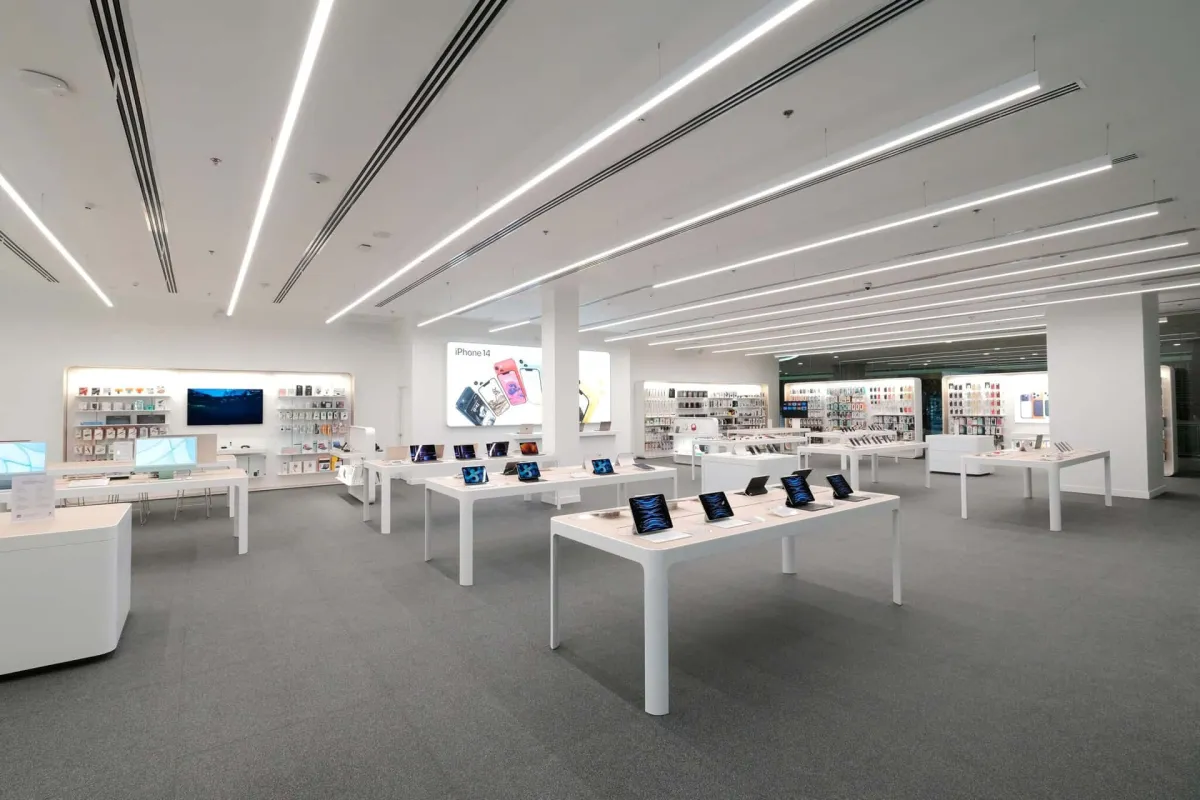 Photo: Apple Store, via wallpapers.com
Somebody should have told the prophets.
Amazon's Eventual Arrival and the Mall's Complicated Feelings About It
Here is where intellectual honesty requires a pivot in the narrative, because eventually — eventually — some version of the prophecy did come true.
The 2010s were genuinely brutal for enclosed malls. Department store anchors — Sears, JCPenney, Macy's — contracted or collapsed. Foot traffic declined. 'Dead mall' became a legitimate real estate category and an entire genre of melancholy YouTube documentary. By 2020, estimates suggested that somewhere between a quarter and a third of American malls were in serious distress.
And then a pandemic happened, which accelerated e-commerce adoption by roughly five to seven years in about fourteen months, and the remaining mall anchors had a very bad time, and the obituary writers dusted off their keyboards with vindicated satisfaction.
But here is the thing: the surviving malls adapted. They converted anchor spaces into apartments, gyms, medical clinics, and entertainment venues. Outdoor lifestyle centers thrived. Luxury malls continued to post strong numbers. The mall did not die so much as it metabolized — absorbing the threat, shedding the weakest locations, and emerging as something different but not exactly extinct.
The Scorecard
Fifty years of mall-death prophecy produced the following results: the catalog did not kill the mall. Cable shopping did not kill the mall. CD-ROM retail did not kill the mall. Early e-commerce did not kill the mall. Amazon eventually wounded the mall, significantly, in a way that the previous four executioners had entirely failed to do — but even then, the mall refused to fully cooperate with its own obituary.
The prophets were wrong on timing by roughly three to five decades, depending on which mall you're standing in. Some of those malls are now medical offices. Some are still selling Orange Julius.
The Orange Julius ones, frankly, feel like a win for everybody.