America's Wallet-Free Utopia Has Been Arriving Tomorrow Since Nixon Was President
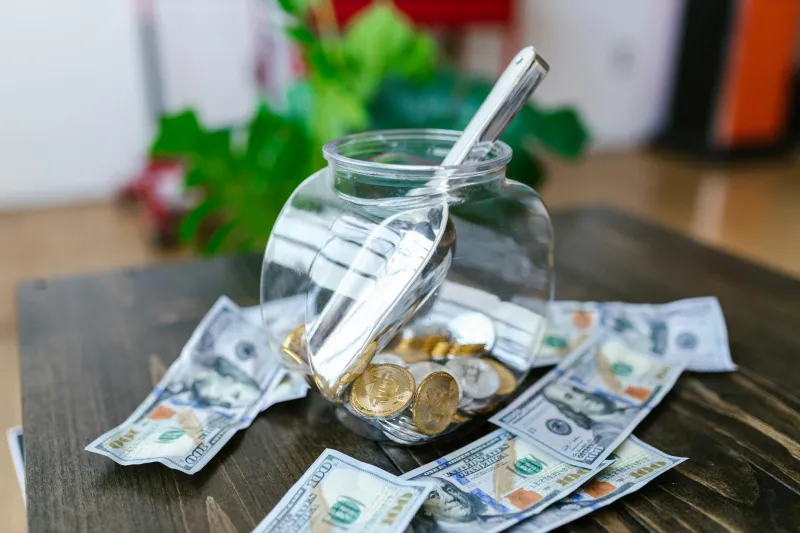
The Great Cash Funeral That Never Happened
Somewhere in a dusty filing cabinet at Bank of America headquarters sits a 1973 memo confidently declaring that paper money would be "obsolete within the decade." The author, presumably now enjoying retirement, probably doesn't want to discuss how that prediction worked out.
 Photo: Bank of America, via wallpapers.com
Because here we are, fifty years later, and Americans are still fishing quarters out of their car cup holders with the determination of prospectors panning for gold. Despite five decades of breathless predictions about the imminent death of cash, physical currency has proven more resilient than a Nokia flip phone and twice as stubborn.
When Checks Were Going to Save Us From Coins
The first wave of cash obituaries hit during the early 1970s, when banking executives discovered something revolutionary: people could write numbers on pieces of paper instead of counting out bills. "The checkbook society is here," declared Business Week in 1974, confidently predicting that physical money would be as quaint as hitching posts by 1980.
These financial visionaries had apparently never met anyone who needed to buy a candy bar or tip a valet. Checks, it turned out, were fantastic for paying the mortgage but spectacularly useless for life's smaller transactions. Try explaining to a hot dog vendor that you'll write him a check for $3.50 and see how that conversation goes.
The Plastic Revolution That Wasn't
By the 1980s, the prophets had pivoted. Forget checks — credit cards were going to eliminate cash entirely. "We're moving toward a cashless society," proclaimed Visa's CEO in 1988, apparently unaware that his own employees were still using quarters for parking meters.
Credit cards did catch on, of course, but they created their own problems. Turns out people were uncomfortable whipping out plastic for a $2 cup of coffee, leading to the awkward dance of minimum purchase requirements and annoyed cashiers that defined retail transactions for the next two decades.
The ATM Card Army Mobilizes
The 1990s brought debit cards and a fresh round of cash death certificates. Bank executives, drunk on the success of automated teller machines, declared that debit cards would finally finish what credit cards started. "Cash will be extinct by 2000," predicted Chase Manhattan's technology chief in 1995.
 Photo: Chase Manhattan, via play-lh.googleusercontent.com
This prediction might have seemed reasonable if you ignored gas stations, farmer's markets, food trucks, parking meters, toll booths, tip jars, church collection plates, Girl Scout cookie sales, garage sales, carnival games, and roughly 847 other daily situations where plastic remained either impossible or incredibly awkward.
Digital Payments Promise the Final Victory
The smartphone era brought new prophets with the same old predictions. PayPal, Venmo, Apple Pay, and Google Wallet were all going to deliver the knockout punch to physical currency. "Cash is dead," declared Venmo's founder in 2015, presumably while standing in line at a cash-only taco truck.
These apps certainly made splitting dinner bills easier, but they also created new problems. Nothing says "smooth transaction" quite like standing at a checkout counter while your phone struggles to connect to WiFi and the cashier taps their fingers impatiently.
The Cryptocurrency Cavalry Arrives
Bitcoin enthusiasts brought the most confident predictions yet. Finally, they declared, we had truly digital money that would make government-issued currency obsolete. "Physical cash will be gone within five years," proclaimed various crypto evangelists throughout the 2010s.
This prediction worked great until people realized that buying coffee with Bitcoin involved explaining blockchain technology to baristas, waiting ten minutes for transaction confirmation, and potentially spending $47 in fees for a $3 latte. Revolutionary? Perhaps. Practical? Not so much.
The Stubborn Reality Check
Here's the plot twist that none of the prophets saw coming: Americans actually use more physical cash today than they did when the first "death of cash" predictions appeared. The Federal Reserve reports that currency in circulation has grown from about $200 billion in 1974 to over $2 trillion today. Even accounting for inflation, that's a lot more green paper floating around.
 Photo: Federal Reserve, via grotte-de-han.be
Why the Prophets Keep Getting It Wrong
The cash funeral planners consistently underestimate three fundamental truths about money:
First, cash is anonymous. In an age of corporate surveillance and data mining, folding money remains blissfully private. Your credit card company knows you bought gas station sushi at 2 AM, but cash keeps that shame between you and your digestive system.
Second, cash works when everything else fails. Power outages, network failures, and system crashes can't stop a twenty-dollar bill. It's the financial equivalent of a Swiss Army knife — simple, reliable, and always ready.
Third, cash is immediate. No waiting for approvals, no checking account balances, no wondering if the payment went through. Money changes hands and the transaction is complete, with all the finality of a handshake.
The Next Wave of Wrong Predictions
Even now, new prophets are emerging with fresh timelines for cash extinction. Central bank digital currencies will surely finish the job, they insist. Facial recognition payment systems are the real answer, others claim.
Based on fifty years of consistently wrong predictions, here's a safer bet: Americans will still be digging through their couch cushions for loose change long after the current crop of cashless society prophets have retired to count their pensions — probably paid in direct deposits that they'll withdraw as cash from ATMs.