Skateboarding's Fifty-Year Death Sentence That Never Got Carried Out
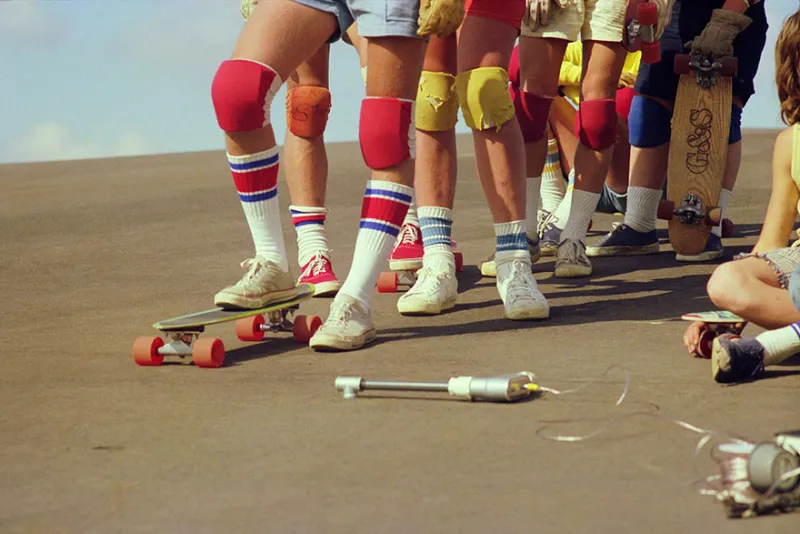
Photo: vintage 1970s skateboarding kids sidewalk retro, via static.boredpanda.com
Skateboarding's Fifty-Year Death Sentence That Never Got Carried Out
There is a specific kind of confidence that belongs exclusively to people who are completely, historically, cosmically wrong. It is a serene confidence. An untroubled confidence. The confidence of a man standing on a beach, pointing at the horizon, and announcing that the ocean is about to run out of water.
America's sports columnists, city council members, and safety-minded parental figures have been deploying this confidence against skateboarding since approximately 1963. The sport has rewarded their certainty by becoming an Olympic discipline. Everyone involved should feel something, and that something is embarrassment.
The First Death: The 1960s Nuisance Era
Skateboarding's original sin, in the eyes of polite society, was that it was cheap, loud, and didn't require a country club membership. When the first commercial skateboards hit American sidewalks in the early 1960s — essentially repurposed roller skate trucks bolted to wooden planks — the reaction from the responsible adult community was swift and unanimous: this was a fad, it was dangerous, and it would be gone by next Tuesday.
The American Medical Association weighed in with characteristic cheerfulness, flagging the boards as a medical hazard. Cities began banning skateboarding on public sidewalks. Sports columnists, who had presumably just finished burying rock and roll, pivoted seamlessly to burying skateboarding. The toy industry, which had briefly manufactured the things, began quietly pivoting away when sales dipped in the late 1960s. See? Fad. Called it. Moving on.
Except the kids didn't move on. They just moved to empty swimming pools.
The Second Death: The 1970s Safety Panic
If the 1960s killed skateboarding once, the 1970s killed it twice, with more paperwork. The Consumer Product Safety Commission, newly empowered and looking for problems to solve, identified skateboarding as one of the most hazardous recreational activities in America. This was probably fair, given that teenagers were throwing themselves down concrete embankments with no helmets and roughly the protective equipment of a houseplant.
The CPSC reported in 1975 that skateboarding injuries had sent more than 100,000 Americans to emergency rooms in a single year. Municipalities redoubled their banning efforts. Suburban homeowners associations, never ones to miss an opportunity to regulate something fun, added skateboarding to their lists of prohibited activities somewhere between "loud music" and "joy."
Sports Illustrated ran a piece in the mid-1970s that managed to simultaneously acknowledge skateboarding's current popularity and predict its imminent obsolescence. This is a journalistic achievement that deserves its own trophy.
The industry did actually collapse in the late 1970s. Skate parks closed. Manufacturers folded. The obituary writers sharpened their pencils and began typing.
The Third Death: The 1980s Moral Panic Remix
By the time skateboarding roared back in the 1980s — louder, faster, and considerably more vertical than its previous incarnations — the people predicting its death had simply updated their arguments. It wasn't just dangerous anymore. It was antisocial. It was counter-cultural. It was associated with punk rock and graffiti and young men in baggy pants who had opinions about authority.
City councils across America held solemn meetings to discuss the skateboard menace. The phrase "skateboarding is not a crime" appeared on bumper stickers and T-shirts, which tells you everything you need to know about the regulatory environment. Skaters were banned from plazas, parks, parking lots, and any flat surface that a bureaucrat could reach with a sign.
This persecution, intended to snuff out the culture, instead gave it an identity. Nothing cements a subculture's longevity quite like making it slightly illegal.
Parenting magazines of the era are a particular treasure. "Is Skateboarding Just a Phase?" asked one 1984 headline, before spending two thousand words essentially answering "yes, probably, hopefully."
The Fourth Death: The 1990s Professionalization That Was Supposedly Selling Out
When skateboarding went professional — proper contests, sponsors, actual prize money — the death predictions mutated into a new form. Now the argument was that commercialization would kill it. Corporate America would sand down the edges, drain out the rebellion, and leave a hollow shell that real skaters would abandon.
Those real skaters would, of course, be watching Tony Hawk perform the first documented 900 — two and a half aerial rotations — at the 1999 X Games in front of a live crowd and a national television audience. The man had just done something that physics had been quietly discouraging for decades, and he did it on a skateboard, and ESPN broadcast it, and the culture did not die. It just got a video game franchise.
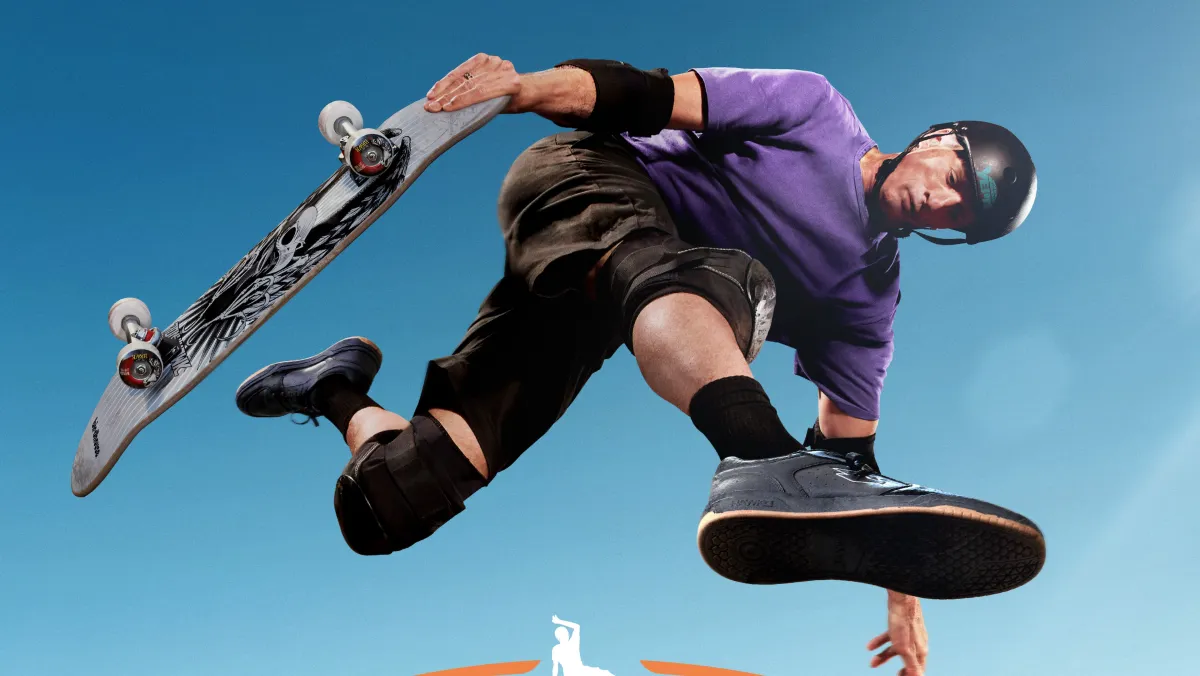 Photo: Tony Hawk, via cdn.mos.cms.futurecdn.net
Tony Hawk's Pro Skater, released in 1999, went on to sell millions of copies and introduce an entire generation of Americans to skateboarding through the medium of not actually skateboarding. This is perhaps not what the prophets of doom had envisioned, but it counts.
The Final Indignity: Olympic Gold
In 2021, at the Tokyo Olympics, Momiji Nishiya of Japan won the first-ever Olympic gold medal in women's street skateboarding at the age of thirteen. Yuto Horigome won the men's equivalent. American skaters took home medals. The world watched.
 Photo: Momiji Nishiya, via c8.alamy.com
 Photo: Tokyo Olympics, via img.jagranjosh.com
Somewhere, the city council members who spent the 1970s and 1980s posting "No Skateboarding" signs on every available surface were presumably watching too. One hopes they felt something.
The International Olympic Committee — an organization not historically known for embracing counterculture — had looked at skateboarding and decided it was the future of the Games. This is roughly the equivalent of your most disapproving uncle finally admitting that the music you like is actually pretty good. Fifty years late, but noted.
What the Prophets Got Wrong
The recurring error in all these obituaries was a fundamental misreading of what skateboarding actually was. The safety crusaders saw a hazard. The city councils saw a nuisance. The sports establishment saw a toy. None of them saw a culture — a genuine, self-sustaining, generationally transmitted culture that could absorb bans, bankruptcies, and bad press the way a skateboarder absorbs a fall: by getting back up and trying the trick again.
The other error was simpler: they kept confusing the industry with the activity. The industry collapsed twice. The activity never did. Kids kept skating in driveways and parking lots and drainage ditches whether or not there was a functioning commercial ecosystem to support them. You cannot ban your way out of something that requires no infrastructure.
The prophets were wrong, mostly. In this case, entirely. The tally stands at approximately eight formal declarations of skateboarding's death against one Olympic gold medal. The scoreboard is not close.
The "No Skateboarding" signs, meanwhile, are still up. Some things are forever.