Cathedrals of Commerce: How America's Mall Prophets Built Monuments to Their Own Overconfidence
Cathedrals of Commerce: How America's Mall Prophets Built Monuments to Their Own Overconfidence
There is a special kind of confidence that only arrives when you are standing inside a freshly opened shopping mall in 1986, bathed in the warm glow of a Cinnabon, surrounded by the soothing sounds of a Casio-heavy soft rock soundtrack, and absolutely certain that you are witnessing the permanent future of human civilization. Retail analysts had it. Developers had it. Lifestyle journalists had it so badly they wrote entire magazine spreads about it.
They were, to put it charitably, mistaken.
The Golden Age of Absolutely Unearned Certainty
To understand the sheer audacity of the mall prophets, you have to appreciate what they were working with. Between 1970 and 1990, the United States built shopping malls at a rate that would have impressed the Pharaohs. By 1987, there were more shopping malls in America than high schools. Developers didn't interpret this as a bubble. They interpreted it as a baseline.
Retail consultants — a profession that has historically confused a good decade for an eternal truth — began publishing reports with titles that aged like warm potato salad. One 1983 analysis predicted that enclosed regional malls would capture "an irreversible majority" of American retail spending well into the twenty-first century. Another forecast, circulated among commercial real estate investors in 1988, suggested the country would need upward of 1,500 additional malls to meet projected demand by 2000. A prominent developer was quoted in the Wall Street Journal suggesting that enclosed malls were "as permanent a feature of the American landscape as the interstate highway system."
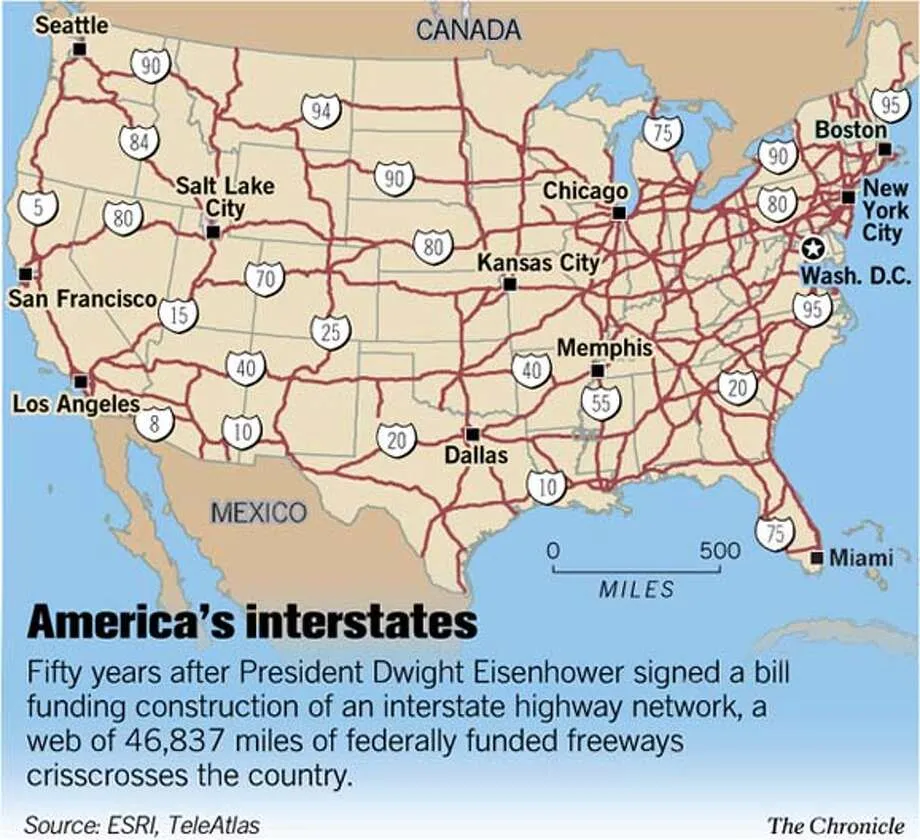 Photo: interstate highway system, via s.hdnux.com
The interstate highway system, of course, was itself famously declared permanent and sufficient in 1956. But that is a story for another article.
Sears: The Anchor That Anchored Everything Down
At the center of every confident prediction sat Sears, Roebuck and Company, the great American anchor tenant, the institutional cornerstone that made banks write checks and developers sleep soundly. You could not have a serious mall without a Sears. This was not merely conventional wisdom — it was treated as a law of retail physics.
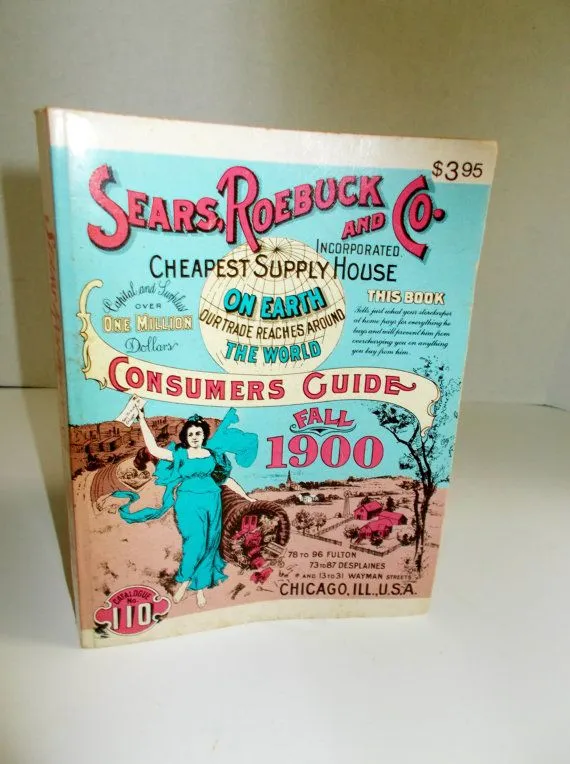 Photo: Sears, Roebuck and Company, via i.pinimg.com
In 1989, a shopping center industry trade publication described Sears as the "gravitational force" around which all successful malls would continue to orbit. Analysts pointed to the company's century-long track record and its seemingly unassailable position in the American consumer's heart. Nobody, the thinking went, was going to out-Sears Sears.
Sears filed for bankruptcy in 2018. At its peak, it had operated over 3,500 locations. Today, fewer than a dozen remain. The stores that once served as the literal structural anchors of hundreds of malls — their square footage so massive that architects designed entire properties around them — became, in a darkly poetic turn, the architectural voids that made those same malls economically unviable. The anchor had become a millstone.
The Ghost Mall Arrives, Right on Schedule
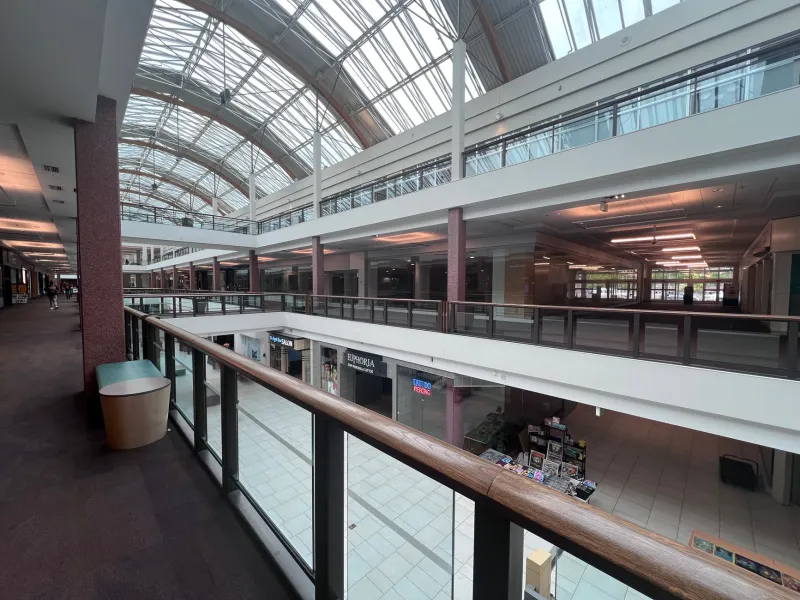
Nobody in 1985 predicted the ghost mall. This is remarkable, because the ghost mall turned out to be one of the more distinctive American contributions to early twenty-first century aesthetics. Entire photography subcultures emerged around documenting them — the waterless fountains, the shuttered Waldenbooks, the lone cell phone kiosk staffed by a teenager who appears to have given up on humanity.
By 2017, analysts estimated that roughly 25 percent of American malls were at serious risk of closure. By the early 2020s, that figure had climbed higher, assisted by a global pandemic that turned out to be less enthusiastic about indoor retail congregating than the 1983 forecasters had anticipated.
The physical structures themselves became an inadvertent monument to the limits of prediction. Developers who had built these properties to last a century found themselves negotiating with trampoline parks, urgent care clinics, and fulfillment warehouses for Amazon — the company that, more than any other single force, had done to the mall what the mall had done to downtown Main Street forty years earlier. History, it turns out, has a sense of humor that retail consultants consistently fail to bill for.
But Wait — Some of Them Were Right (Sort Of)
In the interest of fairness, which this publication practices approximately as often as the mall prophets practiced humility, it should be noted that not every prediction was entirely wrong. The mall visionaries were correct that Americans wanted convenience, climate control, and the ability to buy sneakers and a soft pretzel within the same 200-foot radius. They just got the delivery mechanism slightly wrong.
The online shopping cart is, in a very real sense, the mall's spiritual successor — a place where you can browse forty stores in an afternoon without ever locating your car in the parking structure. The food court has been replaced by DoorDash. The anchor tenant has been replaced by Prime membership. The Muzak has been replaced by a Spotify playlist algorithmically designed to make you spend more money, which is arguably worse.
So the prophets weren't entirely wrong about what Americans wanted. They were just wrong about where Americans wanted to want it.
What the Prophets Didn't See Coming
The tragedy of the mall prophets — and it is a genuine tragedy, in the way that all great American overconfidences are tragedies — is that they mistook a moment for a permanent condition. The enclosed mall thrived in a specific window of American life: the post-interstate, pre-internet, two-car-garage era when suburban families had disposable income, nowhere else to be on a Saturday, and a genuine appetite for the controlled fantasy of retail abundance.
When the window closed, the malls didn't adapt quickly enough. And the analysts who had built their reputations on the mall's permanence had every professional incentive not to notice.
Today, the most successful malls are the ones that stopped pretending to be malls. They added apartments. They added medical offices. They added experience-based entertainment that cannot be replicated by clicking "add to cart." They became, in other words, something closer to the mixed-use town centers that the original malls had displaced in the 1960s and 70s.
America's retail future turned out to look a lot like America's retail past, with better parking and a Cheesecake Factory.
The prophets were wrong. The ghost malls are magnificent. And somewhere in a former Sears, a man is doing burpees on a rubber floor, which is perhaps the most honest monument to the limits of forecasting that civilization has yet produced.