Sayonara, Suckers: How America's Smartest Economists Spent the '80s Bowing to Tokyo

Sayonara, Suckers: How America's Smartest Economists Spent the '80s Bowing to Tokyo
Somewhere in a storage unit, there is almost certainly a box of books with titles like Japan as Number One, The Japanese Power Game, and Trading Places: How We Allowed Japan to Take the Lead. They are not worth much at today's prices. They were not worth much at yesterday's prices, either. But in 1989, they were the hottest things in American publishing, and the people who wrote them were being called geniuses.
This is their story. It does not end the way they planned.
The Consensus Was Ironclad. The Consensus Was Wrong.
By the late 1980s, the conventional wisdom among America's economic intelligentsia had calcified into something approaching religious certainty: Japan was winning, America was losing, and the only real question was how long the transition would take. Ezra Vogel's Japan as Number One, published in 1979, had kicked the whole thing off with academic respectability, and a decade of trade deficits, Sony buying Columbia Pictures, and Mitsubishi snapping up Rockefeller Center had turned that thesis into a near-universal assumption.
 Photo: Rockefeller Center, via static01.nyt.com
The numbers, at the time, were genuinely alarming. Japan's GDP growth was lapping America's. Japanese automakers were eating Detroit's lunch, then asking for seconds. The Tokyo Stock Exchange was valued at more than the New York Stock Exchange. Japanese real estate had become so absurdly expensive that, by one frequently cited statistic, the grounds of the Imperial Palace in Tokyo were theoretically worth more than the entire state of California. This was treated as evidence of Japanese supremacy rather than, say, a warning sign of one of the most spectacular asset bubbles in modern economic history.
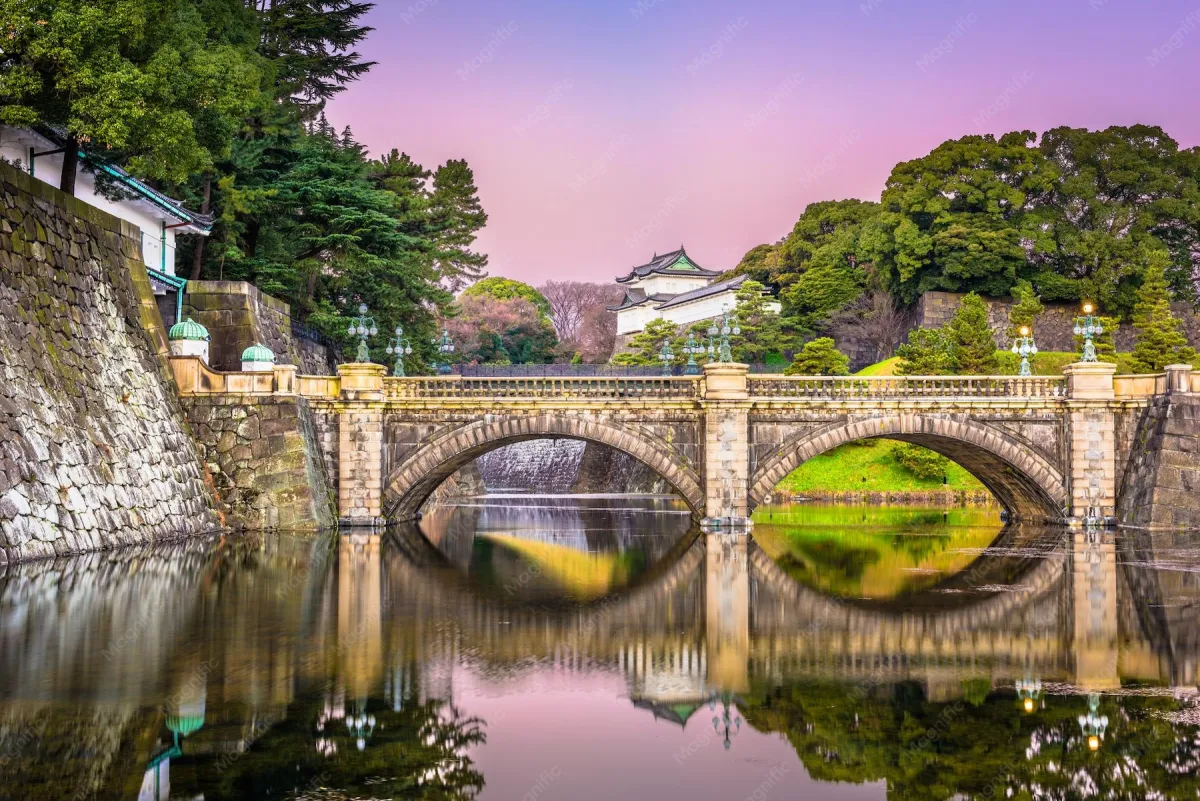 Photo: Imperial Palace, via img.freepik.com
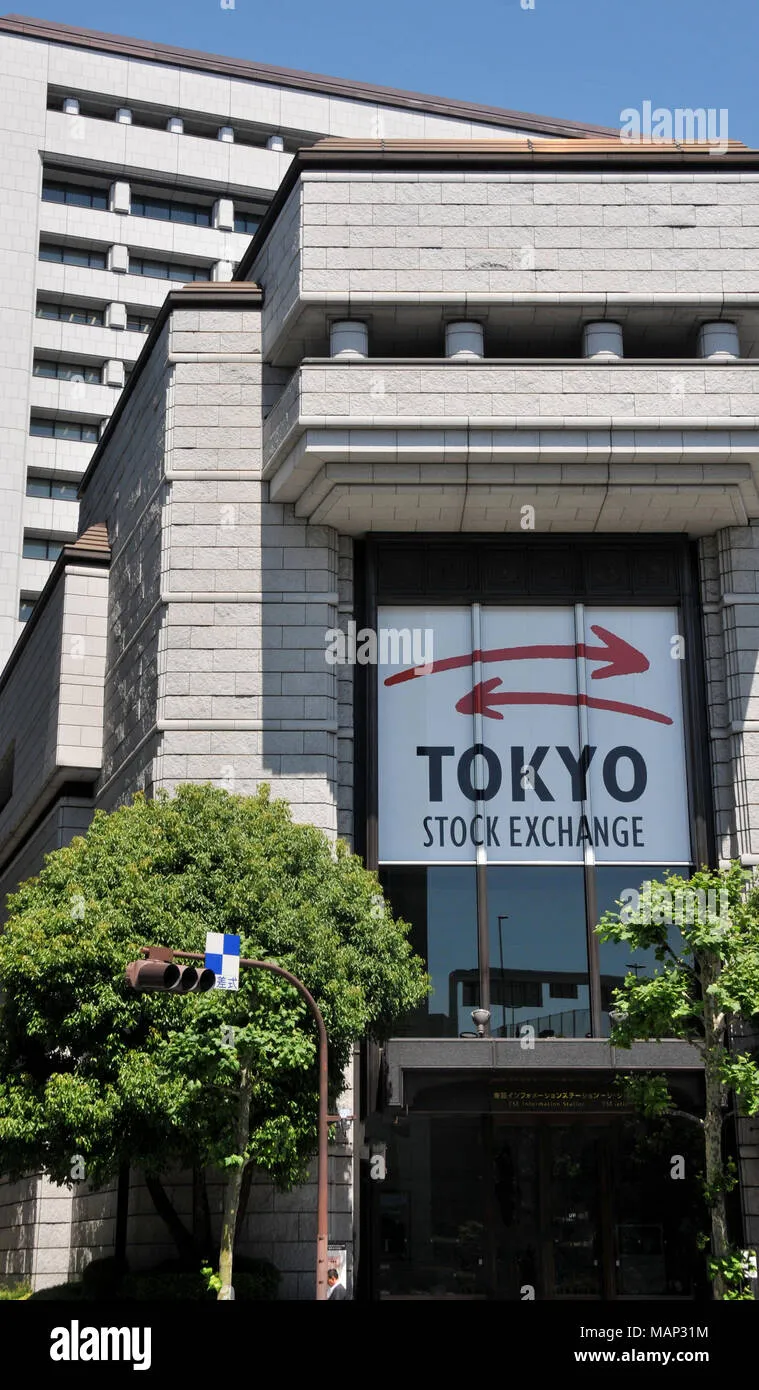 Photo: Tokyo Stock Exchange, via c8.alamy.com
Senate hearings were convened. Trade commissions were assembled. Economists appeared on television with charts. The charts all pointed in the same direction. Spoiler: the charts were wrong.
The Book Industry Had a Field Day
If you want to understand how thoroughly the Japan panic had colonized American intellectual life, consider that between 1985 and 1992, American publishers released an estimated avalanche of books on the Japanese economic threat. Some were sober academic analyses. Many were not. A cottage industry of consultants emerged to teach American executives how to adopt Japanese management techniques, Japanese quality circles, and, in some cases, Japanese aesthetics for their office break rooms, as if the problem was that Detroit needed more bonsai trees.
Michael Crichton — yes, the Jurassic Park guy — published Rising Sun in 1992, a thriller in which sinister Japanese businessmen were essentially colonizing Los Angeles through real estate and corporate manipulation. It was a bestseller. It was also, in retrospect, almost perfectly timed to be maximally wrong, arriving just as Japan's economic miracle was quietly beginning to unravel.
The irony was exquisite. The prophets were shouting loudest precisely when they should have been listening.
Meanwhile, In Tokyo, the Bubble Was Popping
The Japanese asset bubble, which had inflated stock and real estate prices to genuinely surreal levels throughout the late 1980s, began deflating in 1990 with the subtlety of a punctured dirigible. The Nikkei 225 index lost nearly 40 percent of its value in 1990 alone. Real estate followed. Japanese banks, stuffed with loans backed by now-worthless collateral, began their long, agonizing stumble toward insolvency.
What followed became known, with characteristic Japanese understatement, as the Lost Decade. Then, when the first decade of stagnation failed to resolve itself, it became the Lost Two Decades. Growth flatlined. Deflation set in. The demographic time bomb that American analysts had somehow failed to notice — a rapidly aging population with a collapsing birth rate — began its slow detonation.
Mitsubishi quietly sold Rockefeller Center back at a substantial loss. Sony's Hollywood adventure produced a string of expensive disasters. The Imperial Palace grounds turned out not to be worth California after all.
America, Unbothered, Invented the Internet Economy
While Japan's economists were trying to figure out where everything had gone sideways, something unexpected was happening in California. A loose collection of engineers, venture capitalists, and college dropouts was busy inventing an entirely new kind of economy, one built on software, networks, and the radical notion that a company could be worth billions of dollars before it turned a profit.
The dot-com boom of the 1990s was chaotic, irrational, and ultimately partially self-destructive, but it also produced Amazon, Google, and the infrastructure of the modern digital economy. It was, in retrospect, exactly the kind of creative, disorganized, failure-tolerant innovation that Japan's more consensus-driven corporate culture struggled to replicate.
The prophets of Japanese supremacy had looked at America's trade deficits and seen decline. They had somehow missed the garages in Menlo Park.
The Silence of the Prophets
What happened to the experts who had been so certain? The polite answer is that they pivoted. Some began writing about China. Others discovered that their Japan analysis had been correct in spirit if not in outcome — a maneuver that requires a certain impressive flexibility of conscience. A few quietly allowed their books to go out of print.
Ezra Vogel, to his credit, eventually acknowledged that Japan as Number One had been more prescriptive than predictive — a suggestion of what America could learn from Japan's organizational strengths, not a forecast of inevitable Japanese dominance. This was a reasonable reframe, though it bore only a passing resemblance to how the book had been received and marketed at the time.
The Senate hearings produced no lasting policy. The quality circles mostly disbanded. The bonsai trees were quietly removed from the break rooms.
What They Actually Got Right (Because Fairness Demands It)
Here is where intellectual honesty requires a small concession: the Japan analysts were not entirely wrong about everything. Japanese manufacturing techniques — particularly the Toyota Production System and its emphasis on quality control — genuinely transformed American industry. The auto industry's encounter with Japanese competition was painful but ultimately produced better American cars. The pressure was real, even if the predicted outcome was not.
And Japan remains, today, the third-largest economy in the world. Not an irrelevance. Not a cautionary tale of pure collapse. Just a country that turned out to be a country rather than an unstoppable economic supergod.
Which, when you think about it, is exactly what the prophets of Tokyo's inevitable triumph should have predicted in the first place.