The Fortune Tellers of Wall Street Have Been Predicting Tomorrow's Crash Since Yesterday
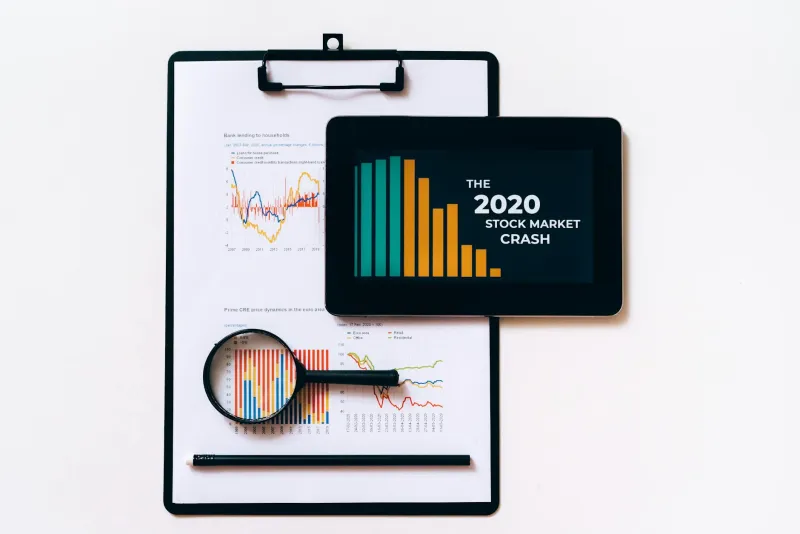
The Perpetual Doomsday Machine
Somewhere in America right now, an economist is adjusting his tie, clearing his throat, and preparing to explain why the next recession is definitely, absolutely, one hundred percent arriving next quarter. He has charts. He has indicators. He has a very serious expression that says he's seen things—terrible economic things—that would make your portfolio weep.
He's probably wrong. They usually are.
Since 1982, America's economic forecasting industry has predicted roughly 47 of the last 4 recessions. This isn't an exaggeration—it's a conservative estimate. The track record is so consistently awful that calling it "forecasting" seems generous. "Very expensive guessing" might be more accurate.
The Yield Curve of Eternal Doom
Every few years, financial media discovers the "inverted yield curve"—a technical indicator that sounds impressive at dinner parties and has successfully predicted nine of the last three recessions. When long-term interest rates drop below short-term rates, economists emerge from their offices like groundhogs, see their shadow, and predict six more months of economic winter.
The yield curve inverted in 1998 (no recession), 2000 (recession came two years later), 2005 (close enough to count), and 2019 (pandemic got there first). But that hasn't stopped CNBC from treating each inversion like the Four Horsemen of the Apocalypse just mounted up and headed for the NYSE.
Magazine Covers: The Kiss of Economic Death
BusinessWeek has put "recession" on its cover approximately 847 times since 1980. Time magazine has declared the economy dead more often than a soap opera character. The most reliable recession indicator isn't employment data or GDP growth—it's whether major magazines are running apocalyptic economic headlines.
In 1988, magazines warned of impending collapse. The economy grew. In 1995, experts predicted disaster from rising interest rates. The dot-com boom followed. In 2007, some economists worried about housing prices, but most were still predicting soft landings right up until Lehman Brothers became a memory.
 Photo: Lehman Brothers, via keplersoft.s3-eu-west-1.amazonaws.com
The Retail Apocalypse That Wasn't (Quite)
For the better part of a decade, economic prophets warned of the "retail apocalypse"—the inevitable collapse of brick-and-mortar stores under the Amazon steamroller. Shopping malls would become ghost towns. Main Street would die. Physical retail was doomed.
Then 2020 happened, and suddenly everyone discovered they actually missed going to stores. Retail sales bounced back faster than experts predicted. Malls adapted. New stores opened. The apocalypse turned into more of a retail evolution, which doesn't make for nearly as dramatic headlines.
The Housing Bubble That Definitely Wasn't a Bubble (Until It Was)
Perhaps the most spectacular forecasting failure came in the mid-2000s, when America's economic establishment lined up to explain why housing prices could never, ever crash. "Housing markets are local," they said. "People always need places to live," they insisted. "This time is different," they declared.
Ben Bernanke, chairman of the Federal Reserve, testified to Congress in 2005 that subprime mortgages posed no threat to the broader economy. Treasury Secretary John Snow assured Americans that housing fundamentals were sound. Even after prices started falling in 2006, many experts predicted a "soft landing" right up until the moment the entire financial system nearly collapsed.
 Photo: Ben Bernanke, via is1-ssl.mzstatic.com
The few economists who did predict the housing crash were dismissed as cranks and attention-seekers. They were right, but being right at the wrong time is apparently worse than being wrong at the right time in economics.
The Science, Art, or Astrology Question
Economics likes to think of itself as a science, complete with mathematical models, statistical analysis, and Nobel Prizes. But the track record suggests it might have more in common with meteorology—useful for short-term predictions, increasingly unreliable beyond a few days, and completely useless for telling you what the weather will be like next Christmas.
Or maybe it's more like astrology. Both involve complex charts, mysterious indicators, and confident predictions about the future based on patterns that may or may not exist. The main difference is that astrologers don't get invited to testify before Congress.
The Perpetual Pessimists Club
Some economists have built entire careers on predicting doom. They're wrong 90% of the time, but when they're finally right, they become legends. It's a brilliant strategy: predict disaster constantly, ignore the misses, and take credit for the occasional hit.
Nouriel Roubini earned the nickname "Dr. Doom" for predicting the 2008 financial crisis. What gets mentioned less often is that he also predicted crises in 2004, 2005, 2006, and 2007 that never materialized. A broken clock is right twice a day, but we don't usually give it a PhD in timekeeping.
 Photo: Nouriel Roubini, via techmediatainment.loforo.com
The Real Recession Indicator
After four decades of spectacularly wrong predictions, perhaps it's time to admit that economic forecasting is less science than educated guessing. The most accurate recession predictor might be this: if everyone is predicting one, it probably won't happen. If no one sees it coming, start worrying.
The experts will keep making predictions because that's what experts do. Television producers will keep booking them because disaster sells better than stability. And somewhere, an economist is preparing his next forecast, confident that this time—this time—he's really figured out the secret patterns that govern the American economy.
He's probably wrong. They usually are. But hey, at least the charts look impressive.