Every Generation Murdered the English Language and Somehow We Can Still Read the Menu
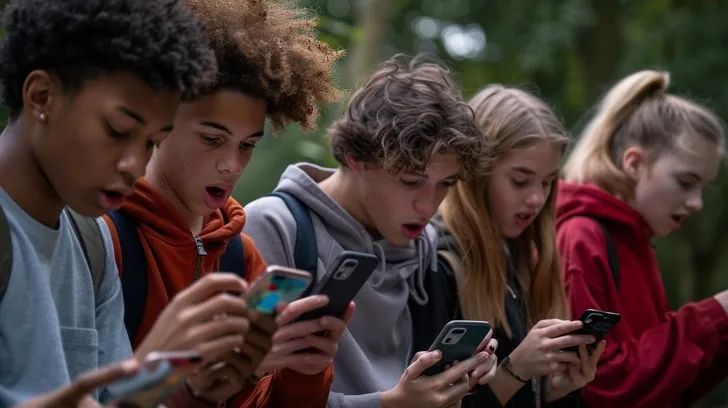
Photo: diverse group teenagers texting smartphones laughing, via images.stockcake.com
Somewhere in America right now, a person of a certain age is reading a text message from a younger relative and experiencing what they sincerely believe to be a unique historical crisis. The words are English, technically. But the meaning is opaque, the grammar is absent, and the punctuation — if it appears at all — seems to be doing something ironic. "This," our concerned citizen thinks, "is how it ends."
This person is wrong. They are wrong in a way that is lovingly documented, richly historical, and absolutely certain to repeat itself with the next generation's slang, whatever form that takes.
Welcome to America's oldest recurring moral panic, now in its twelfth consecutive decade.
The 1900s-1920s: When Flappers Were Going to Destroy Civilization
The modern version of this particular anxiety — the sense that young people's casual speech constitutes an existential threat to linguistic order — crystallized in the early twentieth century with a ferocity that suggests the Edwardians had too much time on their hands.
Schoolteachers and newspaper editors in the 1910s wrote at considerable length about the corrupting influence of slang on American youth. Phrases borrowed from jazz culture, immigrant communities, and the general churn of urban life were treated as linguistic pollutants. By the 1920s, the flappers had arrived with their breezy vocabulary — the bee's knees, the cat's pajamas, copacetic, the berries — and the hand-wringing reached operatic levels.
A 1921 editorial in a Chicago newspaper warned that "the present generation of young Americans, reared on jazz music and motion picture slang, may find themselves incapable of the sustained formal expression upon which a democratic republic depends." Democratic republic, it should be noted, continued to function. The bee's knees is now considered charming. Your grandmother might say it unironically at Thanksgiving.
The 1940s-1950s: Teenagers Were Going to Ruin Everything (First Draft)
The postwar generation introduced a new vocabulary of teenage rebellion — cool, hip, dig it, bread (meaning money), split (meaning leave) — and a new class of professional worriers arrived to document the coming catastrophe. Educators published studies. Newspapers ran features. Concerned parents wrote letters.
A 1951 piece in a prominent education journal fretted that teenagers' increasing reliance on jazz-derived slang represented "a retreat from precision" that would handicap them in professional and civic life. The teenagers in question grew up, entered professional and civic life, and largely did fine. Many of them became the very educators who would, a decade later, write almost identical articles about their children's slang.
This generational handoff of the anxiety is, in retrospect, one of the more elegant features of the whole enterprise.
The 1960s-1970s: Counterculture Vocabulary and the End of Coherent Thought
If any era was tailor-made for linguistic panic, it was the 1960s. The counterculture didn't just use slang — it used slang aggressively, as a deliberate marker of cultural separation from the establishment. Words like groovy, far out, uptight, and bread (still meaning money) were accompanied by a general loosening of formal speech conventions that sent commentators into sustained distress.
Spiro Agnew, who served as Richard Nixon's Vice President and moonlighted as America's most committed scold, gave speeches in which he lamented the degradation of public discourse with a vocabulary that was itself somewhat baroque. Newspaper columnists predicted that the casual speech habits of the Woodstock generation would produce adults incapable of writing a business letter.
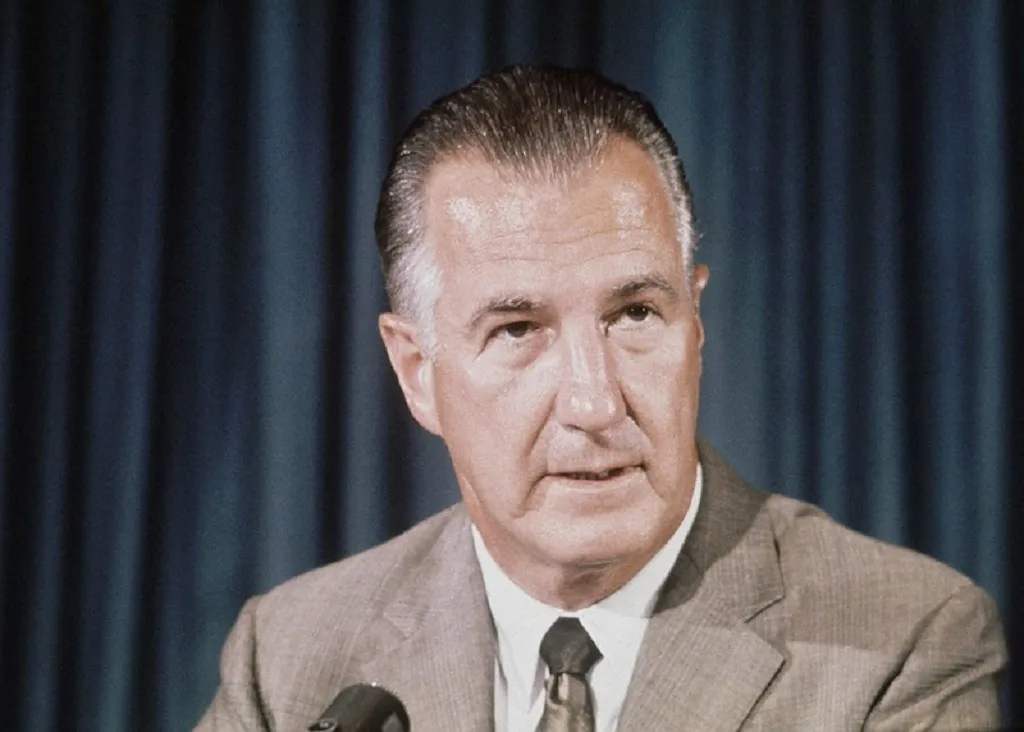 Photo: Spiro Agnew, via wealthypeeps.com
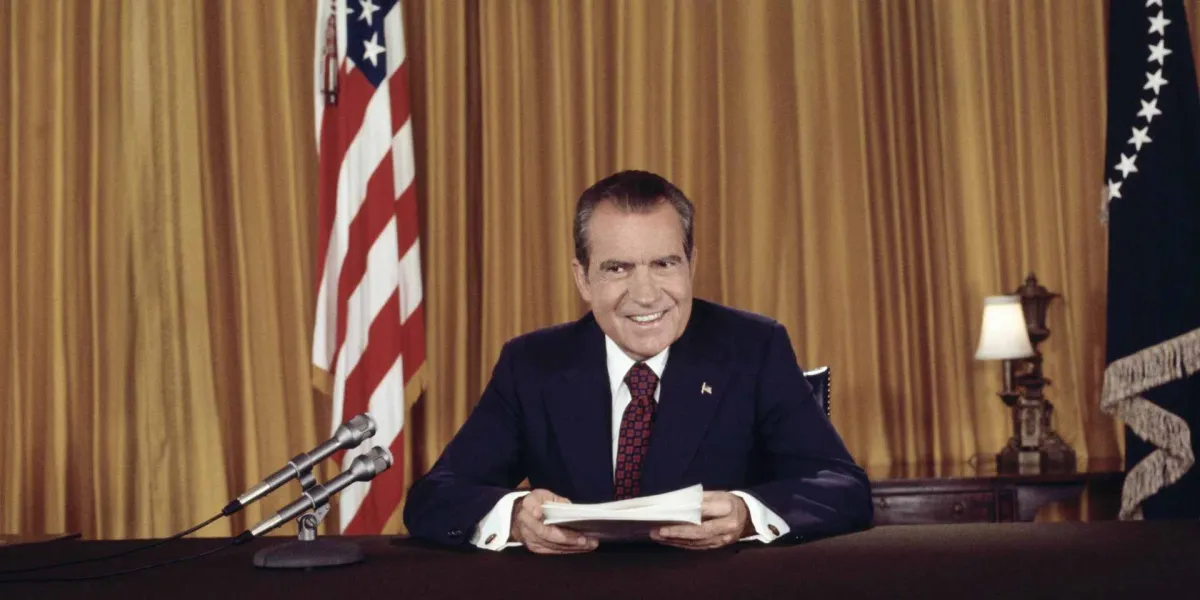 Photo: Richard Nixon, via res.cloudinary.com
Those adults went on to write many business letters, invent the personal computer, and eventually create the internet — where they would encounter slang that made groovy look like the King James Bible.
The 1990s-2000s: The Internet Arrives and the Prophecies Get Louder
AOL Instant Messenger, text messaging, and early internet culture produced a genuine linguistic innovation: the deliberate compression of language into abbreviations, acronyms, and emoticons. LOL, BRB, ROFL, OMG — these entered the culture with the speed and ubiquity that only a networked technology could produce, and the response from the linguistic establishment was approximately what you'd expect.
A 2003 article in a major newspaper — and this is a real genre of article, not a single document — warned that text message abbreviations were "rewiring young brains" for informal communication at the expense of formal literacy. A British linguist (Americans borrowed this panic internationally without shame) suggested in 2008 that text speak was producing a generation that "may struggle to distinguish between appropriate and inappropriate registers of written English."
LOL is now in the Merriam-Webster dictionary. It was added in 2011. OMG joined it the same year. The dictionary, that great bastion of formal English, simply opened its doors and let them in, which is either a capitulation or a recognition that this is how language has always worked, depending on whether you are a descriptivist or someone who is going to have a very hard time with the next decade.
The 2010s-Present: Every New Platform Brings a Fresh Prophecy
Twitter, then TikTok, then whatever arrives next — each platform has generated its own vocabulary and its own associated panic. Slay, lowkey, no cap, bussin, understood the assignment: these terms migrated from specific subcultural communities into mainstream American speech with the velocity that social media enables, and the response has been, by now, entirely predictable.
Op-eds. Concerned educators. Parents who genuinely cannot parse what their children are saying and have decided this is a civilizational problem rather than a normal feature of being a parent at any point in recorded history.
Why the Prophecy Never Dies (Even Though It's Always Wrong)
The persistence of the "slang will destroy English" prediction across twelve decades of consistent failure is, from an analytical perspective, fascinating. Linguists — actual professional linguists, as opposed to newspaper columnists cosplaying as linguists — have pointed out for decades that slang has never destroyed a language. Languages are extraordinarily robust. They absorb new vocabulary, shift in usage, adapt to new technologies, and continue functioning as communication systems with minimal distress.
The panic persists because it is not really about language. It is about change, and about the disorienting experience of watching a younger generation develop codes and references that exclude you. Every generation experiences this. Every generation interprets it as unique. Every generation is wrong.
The bee's knees is charming. LOL is in the dictionary. Whatever your teenager is saying right now will be charming in forty years, and their children will be saying something that makes it sound like Shakespeare.
The language will survive. The prophecies will continue. The menu will remain readable. And somewhere, a person of a certain age is composing a very concerned letter to a newspaper that no longer exists, about a platform they do not use, in defense of a version of English that was itself once considered an outrage.
It's giving the cat's pajamas, honestly.