Fifty Years of Promises: The Paperless Office Was Always Five Minutes Away
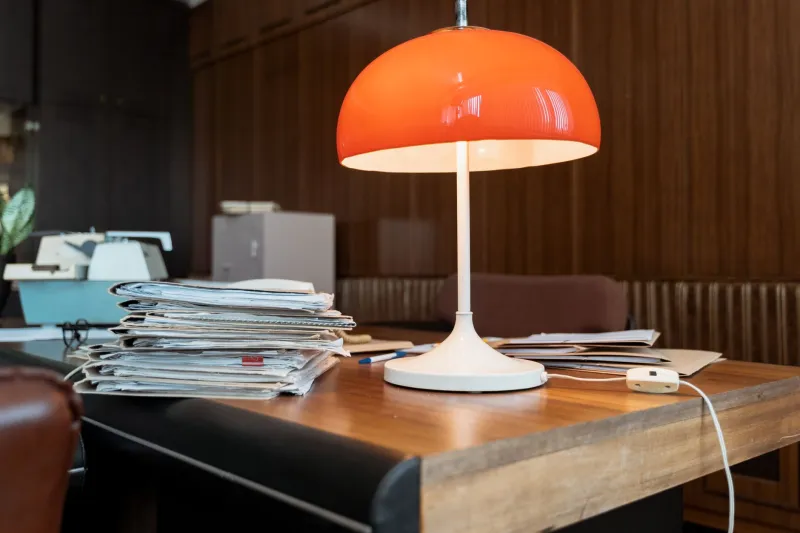
Somewhere in a landfill right now, there are approximately forty-seven printed copies of the same email chain. Subject line: "Re: Re: Re: Re: Can you resend the attachment?" Nobody knows who printed them. Nobody knows why. And yet there they are, quietly haunting the legacy of every futurist who ever promised us a clean, serene, paper-free workplace.
The paperless office is one of the great white whales of American technological prophecy — endlessly pursued, never caught, and somehow still being chased by people who really should know better.
The Prophet Who Started It All
The origin story of this particular failed vision traces back to a 1975 BusinessWeek article that confidently described the coming "office of the future." The piece, written in the breathless tone that technology journalism has never fully abandoned, predicted that electronic systems would soon render physical documents obsolete. Files would live in computers. Memos would travel through wires. The paper industry would pivot to making artisanal greeting cards and quietly weep.
The man most credited with popularizing the specific phrase "paperless office" was Xerox researcher George Pake, who in 1975 described a future desktop screen that would display documents, eliminating the need to print them. The irony that this vision emerged from Xerox — a company whose entire fortune was built on making copies of paper — is the kind of detail that makes history so deeply satisfying.
Within a decade, the prediction had gone mainstream. Business magazines, corporate consultants, and technology evangelists all climbed aboard. The paperless office wasn't a question of if, they said. It was purely a question of when.
When Computers Made Everything Worse
Here is what actually happened: offices got computers, and then they printed more paper than ever before in human history.
This is not an exaggeration. By the 1990s, as personal computers colonized every desk in corporate America, paper consumption in US offices was rising at a rate that would have horrified the 1975 futurists. The invention of the laser printer — itself a Xerox innovation, because apparently the company had a deep commitment to undermining its own prophets — meant that anyone could produce crisp, professional-looking documents at the push of a button. And push that button they did, with tremendous enthusiasm.
The fax machine arrived and generated paper. Email arrived and people printed the emails. Websites arrived and people printed the web pages. PowerPoint arrived and people printed the slides — six to a page, in the distinctive format that still haunts corporate conference rooms like a ghost that refuses to modernize.
US paper consumption peaked somewhere around 2000, at roughly 4 trillion pages per year. That number is so large it has essentially lost all meaning, which is perhaps appropriate for an era that had also lost its grip on the original prediction.
The Experts Double Down, Because of Course They Do
What makes the paperless office saga genuinely special, even by the generous standards of this website, is that the prediction didn't die when the evidence turned against it. It simply rescheduled.
Through the 1980s, consultants assured clients that the paperless office was coming once software improved. Through the 1990s, it was coming once the internet matured. In the early 2000s, it was coming once smartphones made desktop computers feel clunky. In the 2010s, it was coming once cloud storage made local file-saving unnecessary. At each stage, the goalpost moved with the graceful athleticism of someone who has been wrong before and intends to keep going.
Meanwhile, the office supply industry — the people selling the reams of paper and the toner cartridges and the manila folders — kept posting solid quarterly earnings and not saying anything that might jinx it.
A Partial Defense of the Prophets
To be genuinely fair, which this website occasionally attempts, the paperless office did eventually arrive in a partial, squinting sort of way. COVID-19 and the remote work revolution did more to reduce office paper consumption than forty years of earnest futurism managed. Digital signatures are now legally valid. Contracts travel as PDFs. The fax machine, mercifully, is mostly dead, though certain medical offices and government agencies are keeping it on life support out of what appears to be pure spite.
Paper consumption in the US has indeed declined meaningfully since its early-2000s peak. The paperless office is not, technically speaking, impossible. It just took a global pandemic, a decade of tablet computers, and the slow death of the office birthday card to get there, rather than the arrival of a magical mainframe in 1975.
The futurists weren't entirely wrong. They were just working with a timeline that bore no relationship to human behavior, institutional inertia, or the deep psychological comfort people apparently take in holding a physical piece of paper while reading something important.
The Printer Is Still Running
Right now, in offices across America, someone is printing a PDF so they can sign it, scan it, and email it back as a PDF. This process — which is both completely absurd and utterly universal — is perhaps the most honest monument to the paperless office prediction that we have.
The prophets saw the technology coming. They correctly identified that computers would change how information moved through workplaces. What they missed was the stubbornness of human habit, the comfort of the tangible, and the particular genius of the American office worker for finding ways to make new technology serve old behaviors.
The paperless office is still coming. It's always coming. In the meantime, the printer on the third floor is jammed again, and nobody knows whose job it is to fix it.