Chalk One Up for the Skeptics: Six Decades of EdTech Prophets Who Couldn't Kill the Pencil
There is a particular kind of confidence that only an education reformer can muster. It is the confidence of a person who has never spent forty-five minutes trying to get a room full of eighth graders to stop flicking erasers, yet is absolutely certain that the right piece of hardware will transform learning forever. Since roughly the Kennedy administration, these prophets have been arriving in American schools bearing gifts — film projectors, desktop computers, tablets, interactive whiteboards, and now artificial intelligence — and each time, they have announced, with the solemnity of a doctor delivering a terminal diagnosis, that traditional teaching is done.
The pencil, somehow, has survived all of them.
The Flickering Promise of the Film Strip Era
Let us begin in 1961, when educational consultants were telling school boards with a straight face that 16mm film projectors would soon replace large portions of classroom instruction. The pitch was intoxicating: why have a teacher laboriously explain photosynthesis when a film could show it? Why read about the Roman Empire when you could see it?
What actually happened was that generations of American children learned to associate the sound of a film projector with the possibility of a nap. The machines broke constantly. The films arrived scratched. The curtains in most school buildings were never quite dark enough. And the teachers — those supposedly endangered creatures — spent the film period grading papers in the back of the room, completely unbothered by their imminent obsolescence.
By 1970, the audiovisual revolution had produced roughly two outcomes: a thriving repair industry for broken projectors, and students who could thread a film reel faster than any adult.
The Computer That Was Going to Fire Every Teacher in America
The 1980s brought a new messiah in the form of the personal computer. The rhetoric escalated dramatically. This was not merely a teaching aid; this was, according to a truly impressive number of magazine covers, the end of the classroom as a concept.
In 1984, a widely cited report suggested that by 1995, computers would handle "routine instructional tasks" and teachers would be freed to serve as "learning coaches" — a phrase that has since been reinvented approximately forty-seven times. Schools purchased Apple IIs in bulk. Computer labs appeared in hallways like shrines to the future. Children learned to type. Some learned BASIC. Most learned that Oregon Trail was a deeply unfair game that killed your entire family from dysentery before you reached Fort Laramie.
By 1995, the actual deadline year, teachers were still teaching. The computers sat in labs that smelled of industrial carpet cleaner. The textbooks had new editions. The pencils remained.
The Internet Was Definitely the Last Straw
If the personal computer was the beginning of the end for traditional education, the internet was supposed to be the end of the end. By the late 1990s, futurists were arguing that physical schools would become quaint anachronisms within a decade. Why commute to a building when information was everywhere? Why have a teacher when you had search engines?
The answer, it turned out, was that eleven-year-olds left entirely unsupervised with the internet in 1999 did not spontaneously organize into self-directed learning cohorts. They mostly found things their parents would have preferred they not find. Schools hired technology coordinators, installed content filters, and kept buying pencils.
The one genuinely transformative prediction from this era — that students would eventually carry the sum of human knowledge in their pockets — did come true. It just turned out that having the sum of human knowledge in your pocket mostly meant easier access to videos of people failing skateboard tricks.
The Tablet Arrives. Teachers Remain.
The iPad launch in 2010 triggered a fresh eruption of prophecy. School districts across the country spent millions replacing textbooks with tablets. Los Angeles Unified School District famously handed iPads to 640,000 students in 2013 in a program that became a masterclass in optimistic procurement. Within weeks, students had bypassed the security restrictions. The program collapsed in recrimination and audits by 2014.
Other districts had quieter experiences that were, in their own way, equally instructive. The tablets were useful. They were also cracked, lost, forgotten at home, and occasionally used as frisbees. Teachers adapted, incorporated the technology where it helped, ignored it where it didn't, and continued doing what teachers have always done: figuring out which kid in the third row has actually done the reading.
The AI Endgame (We've Heard This Before)
We arrive, inevitably, at the present moment. Artificial intelligence, we are now informed, will transform education more completely than any previous technology. Personalized learning algorithms will replace one-size-fits-all instruction. AI tutors will be available at three in the morning when the homework is due at eight. The teacher, at long last, will be redundant.
Maybe. The technology is genuinely impressive in ways that film projectors were not. But the education prophets have a track record that would embarrass a fortune cookie. They have been predicting the death of the classroom since before most of today's teachers were born, and the classroom remains stubbornly, almost defiantly, alive.
What the prophets consistently miss is not the power of the technology. It is the power of the room. Learning, it turns out, is a profoundly social act. It happens between people. It requires boredom and confusion and the particular mortification of being called on when you don't know the answer. No technology has yet found a way to replicate the experience of a good teacher who notices that a kid in the back row is having a terrible week.
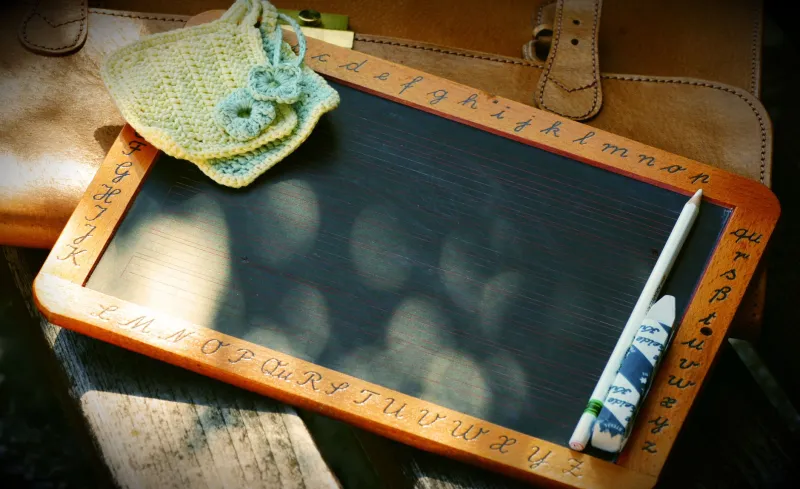
The pencil, for its part, is doing fine. The doodles in the margins are eternal. And somewhere right now, an EdTech startup is preparing a pitch deck that begins with the words: "What if we could finally replace the classroom?"
We look forward to covering it in about ten years.