So You're All Moving In Together: Seven Decades of Household Prophecies That Missed the Couch
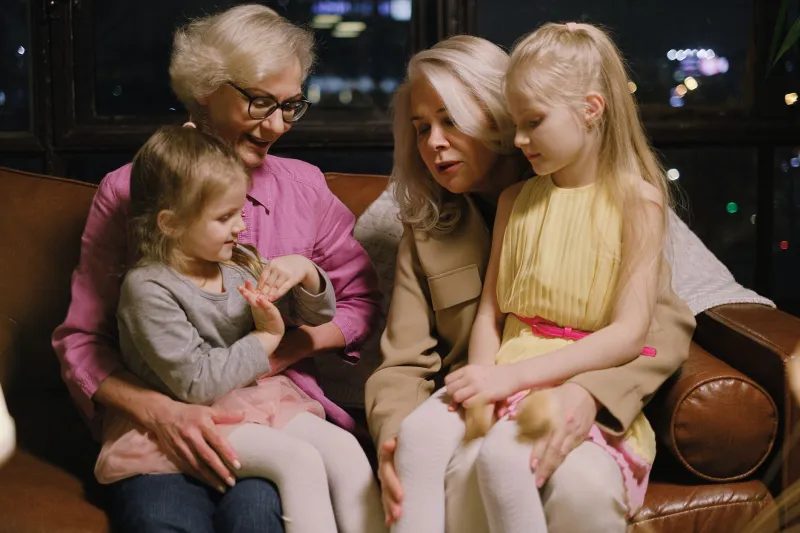
There is no subject that has inspired more confident, wrongheaded prophecy than the American household. Not technology. Not politics. Not even the eternal question of whether the metric system was finally going to catch on. The domestic arrangements of ordinary Americans have attracted an unbroken parade of sociologists, demographers, and cultural theorists who looked at the available data, squinted meaningfully, and announced that everything was about to change—usually within the decade.
They were wrong. Repeatedly. Enthusiastically. And, it must be said, with tremendous style.
The Commune That Was Going to Replace the Suburbs
By the late 1960s, a generation of sociologists had essentially written the obituary for the nuclear family. The evidence seemed compelling at the time: divorce rates were climbing, counterculture communes were sprouting across California and Vermont, and a wave of academic literature announced that the two-parents-and-a-dog arrangement was a historical anomaly about to correct itself.
Futurist Alvin Toffler, writing in Future Shock in 1970, predicted the rise of "temporary marriage" and a dizzying variety of experimental household configurations that would make the postwar suburb look like a quaint historical footnote. Sociologist Barrington Moore Jr. had already suggested, with characteristic academic cheerfulness, that the family might simply become unnecessary altogether.
What actually happened? Americans got divorced more frequently, yes—but then a remarkable number of them got married again. The commune movement peaked, produced some memorable documentaries, and then quietly disbanded as its participants discovered that shared dishwashing schedules are harder to sustain than shared idealism. By 1980, the two-parent household was battered but stubbornly present, and the suburbs were still full of dogs.
The Yuppie Era and the Voluntary Childless Revolution That Wasn't
The 1980s brought a new generation of prophets with a different set of certainties. This time, the prediction was that professional ambition—particularly among women entering the workforce in historic numbers—would trigger a permanent retreat from family formation. The "DINK" (dual income, no kids) couple was heralded not merely as a lifestyle choice but as the emerging default setting for educated Americans.
Business magazines ran features on the childless professional couple as the vanguard of a new American household model. Demographers projected birthrates heading toward floors that would require significant immigration just to keep the workforce stable. A 1986 Newsweek cover story about unmarried women over forty and their statistical chances of finding a husband became one of the most-cited—and most-disputed—pieces of demographic journalism in the decade.
The actual outcome was considerably messier. Birthrates did fall, but not to the apocalyptic lows some had projected. The DINK lifestyle proved to be a phase for many couples rather than a permanent arrangement. And the childless-by-choice demographic, while real and growing, never became the dominant household configuration the prophets had penciled into their models.
The Multigenerational Comeback That Surprised Everyone (Including the People Living It)
Here is where the story takes a genuinely interesting turn, because one set of predictions—largely ignored at the time—turned out to be more or less correct, just for entirely different reasons than anyone anticipated.
A minority of sociologists in the 1970s and '80s predicted a resurgence of multigenerational living. They imagined it as a conscious, values-driven choice: enlightened families voluntarily pooling resources, sharing childcare across generations, and rediscovering the communal wisdom that the nuclear family had supposedly discarded. It would be chosen interdependence, a kind of domestic utopia.
Multigenerational living did rebound—dramatically, in fact. By 2021, roughly 59 million Americans lived in multigenerational households, according to Pew Research, a number that had roughly doubled since 1971. But the reasons were almost entirely economic and practical. Student loan debt, housing costs in major metros, an aging population that needed caregiving, and two recessions in fifteen years pushed families back together not out of ideological conviction but out of straightforward financial necessity.
The commune dreamers of 1970 and the efficiency prophets of 1985 both missed it. The people who got closest to right were the ones who simply noticed that houses are expensive and parents get old—a prediction that required considerably less academic infrastructure to arrive at.
The Co-Housing Movement and Its Perpetually Imminent Breakthrough
No survey of household prophecy would be complete without a moment of silence for co-housing, the architectural and social movement that has been perpetually on the verge of transforming American residential life since the 1980s. The concept—private units clustered around shared common spaces, with residents eating communal meals and collectively managing the property—was imported from Denmark and greeted with enormous enthusiasm by urban planners, progressive architects, and anyone who had ever enjoyed a particularly good dinner party.
Predictions of rapid mainstream adoption were made in 1988. And in 1995. And in 2004. And again, with particular energy, around 2012, when a combination of post-recession economics and millennial values was supposed to finally deliver the breakthrough. As of the most recent count, there are approximately 170 co-housing communities in the United States. For context, there are more Waffle House locations in Georgia alone.
This is not a failure of the concept so much as a persistent overestimation of how many Americans are willing to schedule their dinners around a community calendar.
What the Prophets Kept Missing
Seven decades of household prediction contain a consistent blind spot: the forecasters kept modeling Americans as rational actors optimizing for social outcomes, when in practice most people are optimizing for something considerably more modest—a workable arrangement that doesn't require too many difficult conversations.
The nuclear family didn't survive because it was philosophically optimal. Multigenerational living didn't disappear because Americans had ideologically rejected it. Co-housing didn't conquer the suburbs because the shared kitchen rota proved psychologically demanding in ways that the Danish case studies underreported.
People, it turns out, make housing decisions based on money, proximity to their jobs, what their parents did, and how much they like their in-laws. These are not variables that fit neatly into a sociological model predicting revolutionary change by 1990.
The good news is that this has not discouraged anyone from making the next round of predictions. As of this writing, futurists are actively forecasting that remote work, climate migration, and the loneliness epidemic will trigger a fundamental restructuring of how Americans live together—probably within the decade.
We'll check back in ten years. The couch will still be there.