The Office Isn't Dead, It's Just Confused: A Half-Century of Predictions About Where Americans Would Do Their Work
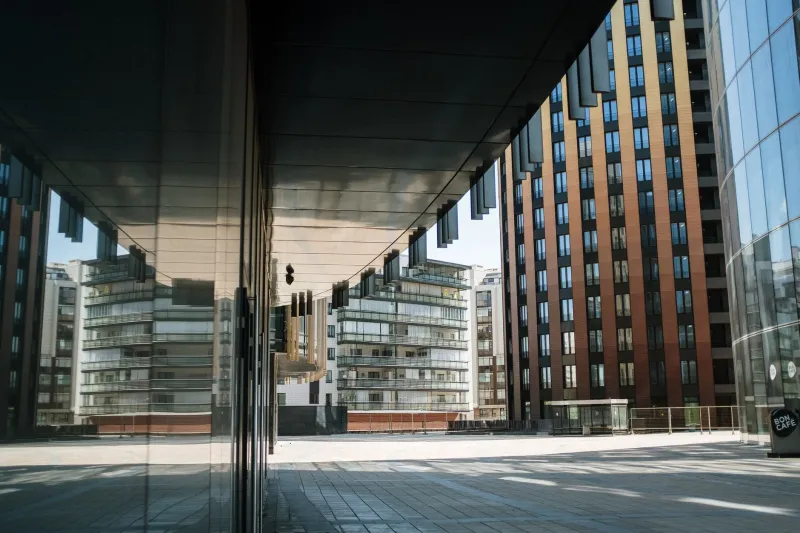
The American office has been declared dead more times than a horror movie villain. It survived the fax machine revolution, the internet revolution, the laptop revolution, and — most recently and most dramatically — a global pandemic that forced roughly 60 million workers to conduct their professional lives from kitchen tables, spare bedrooms, and, memorably, bathroom floors. Each time, the prophecy was the same: this is it, the office is finished, downtown is hollowing out, the commute is over.
Each time, the office has looked up from its ergonomic chair, slightly rumpled, and said: actually, I'm fine.
The 1970s Visionary Who Was Just Slightly Early (By Fifty Years)
The intellectual grandfather of remote work prophecy is a man named Jack Nilles, a former NASA engineer who coined the term "telecommuting" in 1973. Nilles was responding to the oil crisis — if workers didn't have to drive to offices, America could reduce its catastrophic dependence on foreign oil. His projections suggested that a meaningful percentage of American workers could be doing their jobs from home within a decade or two.
Nilles was not wrong about the concept. He was wrong about the timeline, the technology, the infrastructure, and the cultural willingness of American managers to trust employees they couldn't physically observe. In 1985, working from home largely meant having a second phone line and a filing cabinet in the basement. The commute continued. The oil crisis resolved itself through other means. The offices filled back up.
To his credit, Nilles kept working on the idea for decades. He was, in the parlance of our site, a prophet who was wrong mostly — and then eventually, in the strangest possible circumstances, sort of right.
The Internet Was Going to Empty the Cities
By the mid-1990s, a new generation of remote work prophets had arrived, and they had PowerPoint. The argument was elegant and, on its face, completely reasonable: if information could travel instantaneously anywhere in the world, why were millions of people still physically transporting their bodies to the same buildings every morning?
Futurist Alvin Toffler, who had been predicting the death of the office since his 1980 book The Third Wave, was feeling vindicated. The "electronic cottage" — his term for the networked home workspace — seemed finally within reach. Wired magazine ran breathless features about professionals who had escaped New York for Vermont and were doing their jobs perfectly well over a dial-up connection.
What the prophets did not fully account for was that cities, paradoxically, got more attractive as information technology improved. San Francisco, ground zero of the internet economy, became one of the most expensive places on earth to rent an apartment. Austin, Boston, New York — the cities that were supposedly going to drain as workers dispersed to the countryside — became more congested and more costly. The office didn't empty. It expanded. It added kombucha taps and ping-pong tables and tried to make itself seem less like a place you were required to be.
2020: The Prophecy Comes True (For About Eighteen Months)
And then COVID-19 arrived, and the prophets who had been wrong for five decades got their moment. In March 2020, American offices emptied virtually overnight. Zoom became a verb. "You're on mute" became the catchphrase of a civilization. Workers who had been told for years that remote work was impractical discovered that, actually, they could do their jobs from home with a decent WiFi connection and a ring light.
The predictions arrived fast and confident. Commercial real estate was finished. Downtown retail was finished. The great dispersal had begun. People would move to smaller cities, to suburbs, to rural areas. San Francisco in particular was declared dead with the enthusiasm of someone who had been waiting years to say it.
Some of this happened. People did move. Some smaller cities did see population bumps. Commercial real estate did suffer, dramatically and genuinely, in ways that are still unresolved. The remote work prophets of 1973 were finally, partially, vindicated.
The Awkward Return of the Thing That Was Definitely Dead
Here is where the story gets delicious. By 2022, the same tech executives who had declared offices obsolete in 2020 were quietly, then loudly, asking people to come back. Elon Musk, upon acquiring Twitter, immediately declared remote work "morally wrong" — a remarkable theological position on a workplace policy. Amazon, Apple, Google, and JPMorgan Chase all issued return-to-office mandates with varying degrees of firmness and employee hostility.
Meanwhile, San Francisco — the city that was definitively dead — still had median rents that would make residents of most American cities quietly weep. New York City, also definitively dead, had its lowest vacancy rates in years for certain residential neighborhoods. The prediction had collided with the strange reality that people, it turns out, actually like cities. They like the restaurants and the density and the accidental conversations and the sense that something is happening nearby.
What emerged instead of either prophecy — the fully remote utopia or the fully in-person restoration — was a hybrid arrangement that satisfies almost no one completely and that the office furniture industry has been trying to design around ever since.
What the Prophets Kept Getting Wrong
The consistent error in fifty years of remote work prophecy was treating the office as purely a logistics problem. If information can travel without bodies, bodies need not travel. It is a clean and reasonable argument. It is also, apparently, incomplete.
What the office provides — and what no one predicted would be hard to replicate — is the ambient experience of working near other people. Not the meetings, which everyone agrees are mostly too long. Not the open-plan noise, which most people find maddening. But the incidental collaboration, the hallway conversation, the lunch that becomes a project, the sense of shared enterprise that is genuinely difficult to manufacture over a video call where someone is always slightly frozen.
The commute, that great villain of the remote work story, remains. It is shorter for some people now. It is more flexible. But the office itself, battered and reconsidered and slightly less certain about its purpose, is still very much in business.
Jack Nilles, now in his eighties, has watched all of this with what one hopes is a degree of wry satisfaction. He was right that it would happen. He was only off by about fifty years, one pandemic, and several trillion dollars in commercial real estate debt.
Close enough, perhaps, for a prophet.