The Great American Water Panic: A Century of Experts Swearing the Taps Were About to Run Dry
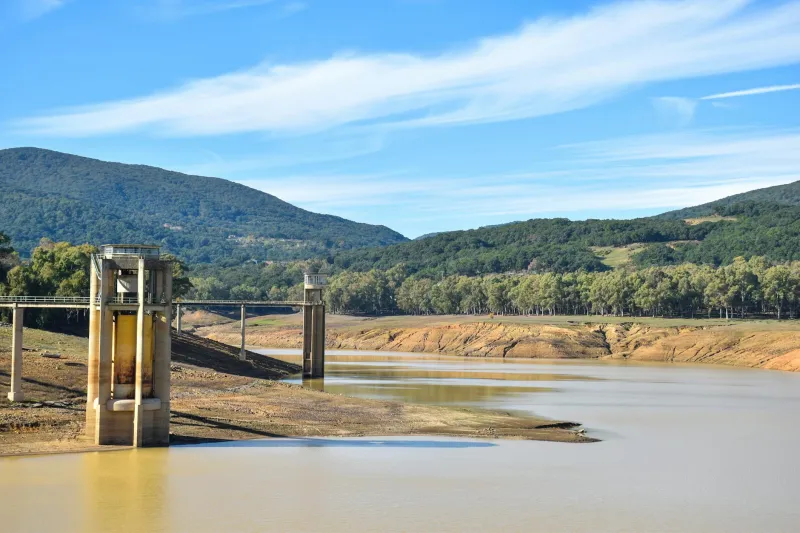
Somewhere in America right now, someone is predicting that we're about to run out of water. They've been doing this for over a century, with the consistency of Old Faithful and roughly the same accuracy as a Magic 8-Ball.
Meanwhile, Americans continue their love affair with swimming pools, car washes, and lawns so green they'd make Ireland jealous. It's almost like the experts and reality are having two completely different conversations.
The Dust Bowl Prophets Launch a Movement
The modern American water panic got its start during the Dust Bowl of the 1930s. As topsoil literally blew away and farmers watched their livelihoods turn to dust, a generation of experts looked at the devastation and concluded: this is just the beginning.
Hydrologists and agricultural scientists painted apocalyptic scenarios of America's water supplies dwindling to nothing. The Great Plains would become a permanent desert. The Southwest would empty out. Millions would flee eastward in search of water, creating refugee camps that would make the Dust Bowl migrations look like a pleasant Sunday drive.
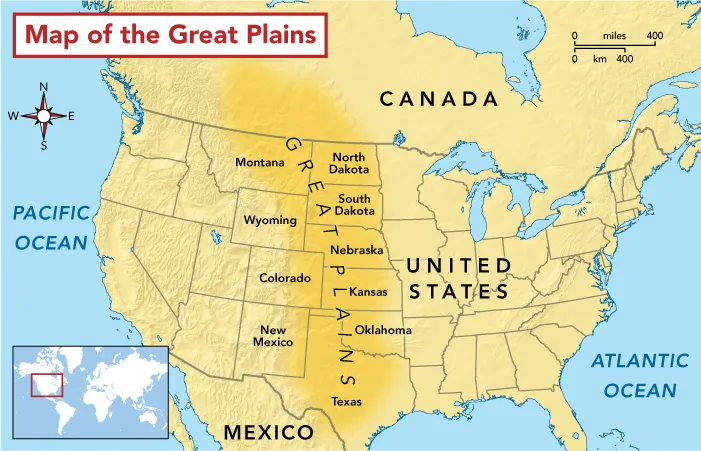 Photo: The Great Plains, via nemsahoveizavi.weebly.com
Never mind that the Dust Bowl was largely caused by poor farming practices and unusual weather patterns. Never mind that much of it could be fixed with better soil management and irrigation. The narrative had been set: America was running out of water, and we were all doomed.
The 1970s: Peak Panic Meets Peak Environmentalism
If the 1930s planted the seeds of water anxiety, the 1970s turned it into a full-blown cultural phenomenon. Environmental consciousness was exploding, Earth Day was new and exciting, and Americans were suddenly very concerned about running out of everything.
Water topped the list of things we were supposedly running out of.
Experts warned that America's aquifers were being "mined" rather than replenished. The Ogallala Aquifer — that massive underground reservoir beneath the Great Plains — was being drained so fast it would be bone dry by the year 2000. Coastal cities would face catastrophic shortages. The entire American way of life was unsustainable.
Congress held hearings. The media ran breathless exposés. Americans learned terms like "water table" and "sustainable yield" and "hydrological crisis." The message was clear: start taking shorter showers, because the party was almost over.
California: The Eternal Crisis State
No discussion of American water panic would be complete without California, the state that has elevated water anxiety to an art form. Since roughly 1850, California has been approximately six months away from complete hydrological collapse.
Every drought brings fresh predictions of doom. Every wet year gets dismissed as a temporary reprieve. California's water situation is always "unprecedented" and "unsustainable" and "critically urgent," regardless of whether the reservoirs are full or empty.
The Golden State has been predicting its own water-induced demise for so long that it's become part of the state's identity. Californians discuss rainfall totals with the intensity that other Americans reserve for sports statistics. They know the names of their local reservoirs the way New Yorkers know subway stops.
And yet, somehow, California keeps not running out of water. Even during severe droughts, the taps keep flowing. Farmers keep farming. Angelenos keep filling their pools. It's almost like humans are capable of adapting to changing conditions.
The Solutions That Never Quite Materialize
The beauty of the water crisis industry is that it's always got a solution — usually an expensive, technologically complex solution that will definitely work if we just throw enough money at it.
Desalination plants were going to save us. These massive facilities would turn seawater into drinking water, solving the crisis forever. Except desalination turned out to be energy-intensive, expensive, and environmentally problematic. Most of the plants that got built with great fanfare in the 1970s and 1980s now sit idle or operate at a fraction of their capacity.
Cloud seeding was another favorite. Scientists would shoot silver iodide into clouds, forcing them to drop their moisture where we needed it most. Weather modification would make droughts a thing of the past. Except cloud seeding works about as well as you'd expect a scheme to control the weather to work, which is to say: not very well at all.
Water recycling was the next big thing. "Toilet to tap" technology would clean wastewater so thoroughly that you couldn't tell it from mountain spring water. This one actually worked pretty well, but Americans proved surprisingly squeamish about drinking recycled sewage, no matter how clean it was.
The Moving Goalposts of Crisis
One of the most entertaining aspects of America's century-long water panic is how the predictions keep shifting. When the original doomsday dates pass without catastrophe, the experts simply move the timeline forward and keep predicting.
The Ogallala Aquifer was supposed to be dry by 2000. When 2000 came and went with the aquifer still very much wet, the new prediction became 2030. When that started looking shaky, it became 2050. At this rate, the Ogallala will run dry sometime around the heat death of the universe.
California has been in a "permanent drought" since the 1970s, except for all those years when it wasn't. The Southwest has been on the verge of emptying out for decades, even as cities like Phoenix and Las Vegas keep growing.
It's almost like the crisis is always just far enough in the future to be scary, but not so close that anyone can definitively prove it won't happen.
The Inconvenient Reality of American Abundance
Here's the thing about America's water crisis: America has a lot of water. Like, a lot of water. The Great Lakes alone contain roughly 20% of the world's fresh surface water. The country gets plenty of rainfall. Rivers flow year-round. Aquifers recharge.
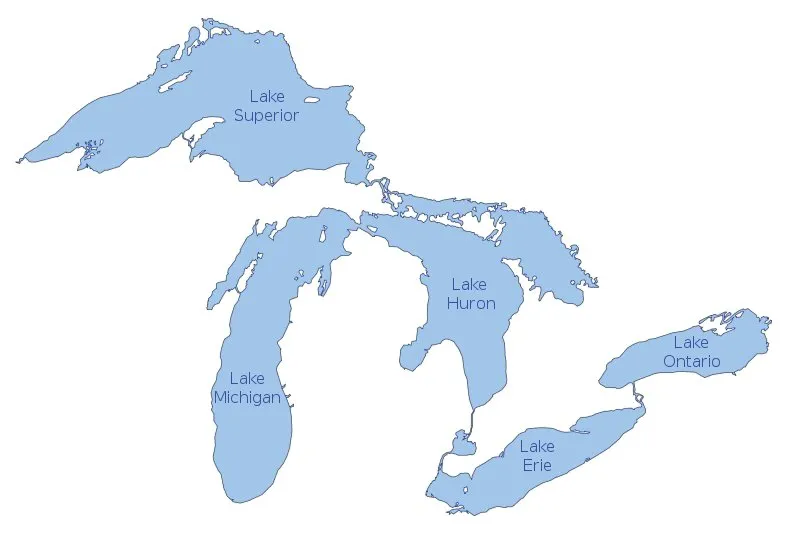 Photo: The Great Lakes, via www.godsgeography.com
Yes, water is unevenly distributed. Yes, some regions face genuine challenges. Yes, climate change affects precipitation patterns. But the idea that America is running out of water? That's about as accurate as predicting that Wisconsin will run out of cheese.
Americans use water efficiently when they need to and wastefully when they can afford to. During droughts, consumption drops. When water is plentiful, people water their lawns and wash their cars. It's almost like market forces and human behavior respond to actual conditions rather than expert predictions.
The Eternal Return of Water Panic
The most remarkable thing about America's water crisis predictions is their persistence. Every generation produces a fresh batch of experts who are absolutely certain that this time, we really are running out of water. The details change — climate change instead of the Dust Bowl, population growth instead of agricultural depletion — but the core message remains the same: start hoarding bottled water, because the end is near.
Maybe there's something comforting about having a crisis to worry about. Maybe predicting disaster makes people feel important and relevant. Or maybe Americans just like being scared about things that probably won't happen.
Whatever the reason, you can bet that somewhere in America right now, an expert is looking at the latest rainfall data and concluding that we've got about fifteen minutes of water left. And somewhere else, an American is turning on their sprinkler system and wondering what all the fuss is about.