The Chemical Dreamers Who Swore Plastic Would Replace Everything Natural by 1975
In 1950, the executives at DuPont weren't just selling chemicals — they were selling the future. A future where Americans would live in plastic houses, wear plastic clothes, eat off plastic plates, and drive cars made from plastic that would last forever without rusting, rotting, or requiring much maintenance.
Popular Mechanics ran breathless articles about the coming "Plastic Age," when synthetic materials would make everything cheaper, lighter, more colorful, and essentially perfect. The magazine's 1955 prediction was that by 1975, "natural materials will be curiosities, like hand-woven cloth or wooden furniture — expensive luxuries for people who can afford to be old-fashioned."
They weren't entirely wrong. Plastic did take over the world. It's just that "everywhere" included places like the Pacific Ocean, the food chain, and, according to recent studies, human bloodstreams.
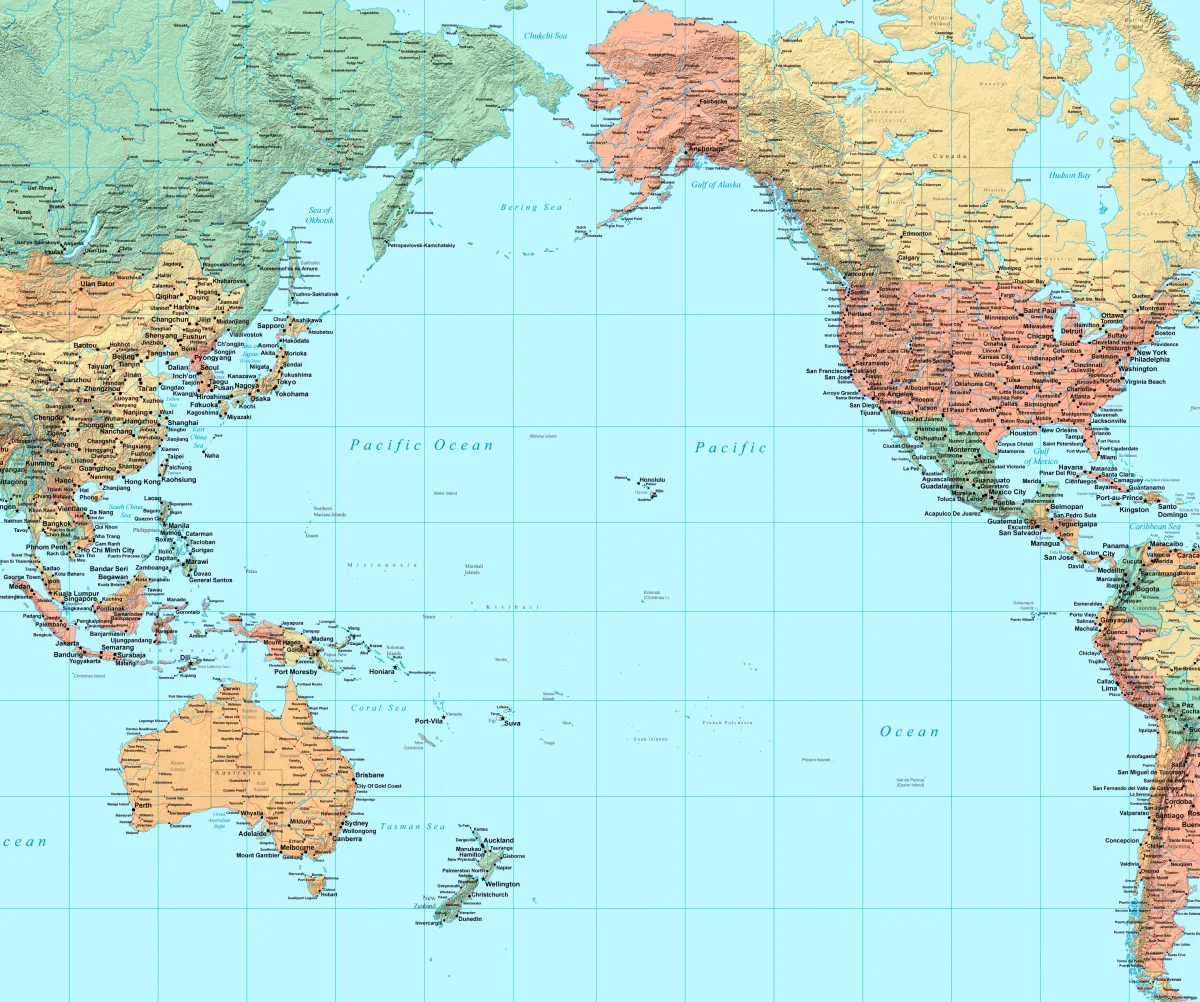 Photo: Pacific Ocean, via ontheworldmap.com
The Polymer Prophets
The post-war chemical industry was riding high on a wave of scientific optimism that seemed justified by recent history. These were the same companies that had helped win World War II by developing synthetic rubber, nylon parachutes, and plastic components for aircraft. If chemistry could defeat fascism, surely it could defeat the inefficiencies of natural materials.
DuPont's "Better Things for Better Living Through Chemistry" slogan wasn't just marketing — it was a manifesto. Company scientists genuinely believed they were engineering humanity's next evolutionary leap, replacing the random accidents of nature with the precise perfection of laboratory-designed molecules.
The predictions were comprehensive and confident. By 1970, families would live in molded plastic houses that could be manufactured like automobiles and assembled in a day. Clothing would be made from synthetic fibers that never wrinkled, stained, or wore out. Even food packaging would be revolutionary — instead of cans and paper, everything would come in lightweight, unbreakable plastic containers that would keep food fresh indefinitely.
The Monsanto House of Tomorrow
The chemical industry didn't just make predictions — they built prototypes. In 1957, Monsanto partnered with MIT to construct the "House of the Future" at Disneyland, a completely plastic dwelling that showcased what American homes would look like by 1975.
 Photo: House of the Future, via i.pinimg.com
The house featured plastic walls, plastic furniture, plastic dishes, and even a plastic bathtub. Everything was molded, colorful, and designed to last forever without maintenance. Visitors could walk through rooms where nothing was made from wood, metal, or natural fibers.
The exhibit was wildly popular, attracting over 20 million visitors during its decade-long run. Americans were genuinely excited about the prospect of maintenance-free living. Why paint wood when you could mold plastic in any color? Why deal with rust when you could have materials that lasted forever?
When Forever Became the Problem
The plastic prophets got their predictions spectacularly right and catastrophically wrong simultaneously. Plastic did indeed replace natural materials in thousands of applications. Walk through any modern home and try to find something that doesn't contain synthetic polymers. Your computer, your car, your clothes, your food packaging — it's all exactly what the 1950s futurists promised.
But "lasts forever" turned out to be a feature and a bug. The same indestructibility that made plastic so appealing for consumer goods made it an environmental nightmare when those goods were discarded. The chemical industry had engineered materials that nature had no idea how to break down.
By the 1970s — exactly when the plastic paradise was supposed to arrive — Americans were discovering that their synthetic wonderland had a garbage problem. Plastic bottles were washing up on beaches. Synthetic clothing was shedding microfibers that ended up in fish. The materials designed to make life easier were making the planet more complicated.
The Microplastic Surprise
Here's what absolutely nobody predicted in 1950: that plastic wouldn't just replace natural materials in products, but would gradually replace natural materials in the environment itself. Recent studies have found microplastics in rainwater, soil, and human blood. The chemical industry's dream of ubiquitous synthetic materials came true in ways they definitely didn't intend.
The same DuPont scientists who promised that plastic would improve human health are now dealing with the discovery that plastic particles are literally circulating in human bodies. The materials designed to be completely separate from biological systems have somehow integrated themselves into biological systems.
It's like the chemical industry's marketing department got their wish granted by a malicious genie.
The Recycling Reality Check
The plastic prophets did anticipate one problem: what to do with all the synthetic materials after people were done with them. Their solution was characteristically optimistic — recycling would turn waste plastic back into new products, creating a closed-loop system where nothing was ever actually thrown away.
This prediction aged about as well as a plastic bag in sunlight. Despite decades of recycling programs, less than 10% of plastic ever produced has been recycled. The rest is still out there somewhere, fulfilling the chemical industry's promise of permanence in ways they definitely didn't anticipate.
The Synthetic Scorecard
Looking back, the 1950s plastic prophets were remarkably accurate forecasters who completely missed the most important consequences of their own predictions. They correctly anticipated that synthetic materials would become ubiquitous, affordable, and functionally superior to natural alternatives in many applications.
What they missed was that "better living through chemistry" would come with an environmental bill that's still being calculated. The plastic paradise they promised arrived on schedule — it's just that paradise turned out to include plastic islands in the ocean and microplastics in the food chain.
Modern Americans live in exactly the synthetic world that DuPont envisioned in 1950. We just wish we could return some of it to the manufacturer.
The Biodegradable Redemption Arc
The current generation of chemical engineers is essentially trying to solve the problem their predecessors created by being too successful. Today's "better living through chemistry" involves designing plastics that break down naturally, developing alternatives to synthetic materials, and figuring out how to clean up the permanent materials that were supposed to make life easier.
It turns out the chemical industry's biggest success was also its biggest failure. They created materials so perfect at being plastic that they're still being plastic decades after anyone wanted them to be.
The polymer prophets got everything right except the part where their synthetic paradise would need a cleanup crew that's still working overtime seventy years later.