Suburbia's Fifty-Year Fake Death: The Neighborhood That Refused to Read Its Own Obituary
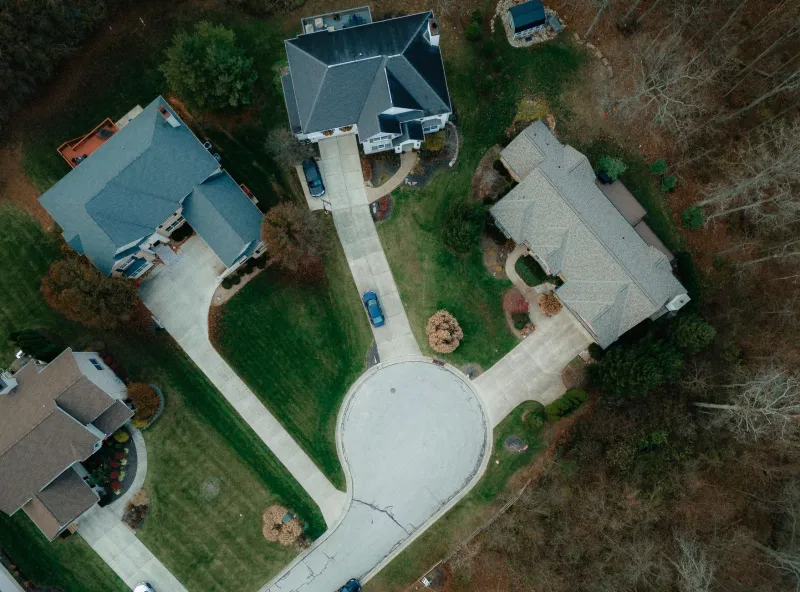
Somewhere in a cul-de-sac right now, a family is loading a minivan for a soccer game in a subdivision that was supposed to be either abandoned, transformed into an urban village, or repopulated by remote workers fleeing the city—depending on which decade's batch of experts you consulted. The minivan is fine. The subdivision is fine. The experts are, as usual, working on revised forecasts.
American suburbia has been dying for fifty years. It just keeps not doing it.
Death Certificate Number One: The 1970s Energy Crisis Verdict
The first serious wave of suburban obituaries arrived with the oil embargo of 1973. The logic was airtight, or so it seemed: suburbs were predicated on cheap gasoline and the automobile. Remove cheap gasoline, and the whole sprawling experiment would unravel. People would abandon their car-dependent ranch houses and migrate back toward walkable urban cores where transit was available and heating oil wasn't a monthly budget crisis.
Urban planners, sociologists, and newspaper columnists agreed with unusual unanimity. A 1975 Harper's essay predicted that the American suburb, as a dominant residential form, would be "functionally obsolete" by the mid-1980s. Gasoline prices would make the daily commute untenable. Heating costs would make the large suburban house a luxury no middle-class family could sustain. The math was inexorable.
The math was wrong. Gas prices stabilized, then dropped. Suburban growth resumed. The 1980s brought not the death of the suburb but the birth of the exurb—an even more distant, even more car-dependent variation on the theme. The prophets had not predicted this. Nobody asked them why.
Death Certificate Number Two: The Urban Renaissance of the 1990s
By the 1990s, the prevailing wisdom had executed a near-complete reversal. Cities were coming back. Crime rates were falling, downtowns were revitalizing, and a new class of young professionals—later to be called millennials—was choosing loft apartments over starter homes. Suburban retail was being strangled by the same big-box stores that had originally strangled downtown shops, which felt like poetic justice to everyone except suburban retailers.
The prediction class responded accordingly. Urban theorists like Richard Florida were building careers around the "creative class"—a demographic that, by definition, preferred urban density, cultural amenities, and walkable neighborhoods to the soul-crushing conformity of the cul-de-sac. Florida's 2002 book The Rise of the Creative Class became a civic planning bible. Mayors read it. Economic development offices cited it. The conclusion was clear: talent flowed to cities, and suburbs were where talent went to stagnate.
The suburbs, apparently unaware of their cultural demotion, kept growing. Yes, urban cores gained residents during this period—particularly in gateway cities like New York, Chicago, and San Francisco. But suburban populations grew faster in absolute numbers throughout the 1990s and 2000s. The creative class existed. It just also included people who wanted a yard and a decent school district and were willing to commute for them.
Death Certificate Number Three: The Pandemic Remote-Work Apocalypse
Nothing in recent memory generated suburban prophecy quite like the COVID-19 pandemic. When office workers discovered in March 2020 that their jobs could apparently be performed from a kitchen table in Naperville, the conclusion was immediate and sweeping: cities were finished.
The logic, again, seemed airtight. If you no longer needed to be near the office, why pay Manhattan or San Francisco prices? Why endure urban density, noise, and expense when you could decamp to a larger home in a lower-cost suburb or exurb and Zoom your way through the workweek? Real estate data appeared to confirm the thesis—urban apartments sat vacant while suburban home prices spiked to alarming levels.
Coverage was breathless. The Atlantic, The New York Times, and approximately every business publication in the country ran variations on the theme: the great urban exodus had begun, remote work was permanent, and the suburb was ascendant in ways that would reshape American geography for decades.
Then offices started calling people back. Then urban apartment markets tightened again. Then the data revealed that the "exodus" from cities had been, in many cases, a temporary reshuffling that partially reversed as pandemic conditions changed. Some people did leave permanently. Many did not. The suburbs gained residents, but cities did not hollow out. San Francisco had genuine problems—but San Francisco's problems were specific to San Francisco, not a universal template for urban decline.
By 2023, headlines that had declared the death of the office were being written by journalists sitting in offices. The irony was noted by almost nobody.
Why Suburbs Keep Surviving Their Own Funerals
The recurring failure of suburban death predictions points to something the prediction class consistently underweights: revealed preference. Americans, when given choices, have repeatedly chosen some version of suburban living in large numbers. Not all Americans—cities are real, dense urban neighborhoods are real, and millions of people genuinely prefer them. But the suburban form keeps proving more durable than its critics expect because it keeps delivering something a meaningful portion of the population actually wants.
That something shifts over time. The suburbs of 2024 are not the suburbs of 1954—they're more racially diverse, more economically varied, more likely to contain walkable town centers and mixed-use development than the prophets of either doom or renaissance tended to acknowledge. The form adapts. The obituaries don't.
There's also a simpler problem: urban planning predictions tend to be made by people who live in cities, study cities, and find cities interesting. Suburbs are, by the standards of the academic and journalistic classes, not interesting. This creates a systematic bias toward underestimating them—toward seeing suburban persistence as a failure of the population to understand what's good for them, rather than as data about what people actually want.
The next suburban death certificate is already being drafted somewhere. A think tank is running the numbers. A columnist is sharpening a metaphor about cul-de-sacs and cultural irrelevance.
The minivan is already in the driveway. The soccer game starts at nine.