The Boston Strangler in Your Living Room
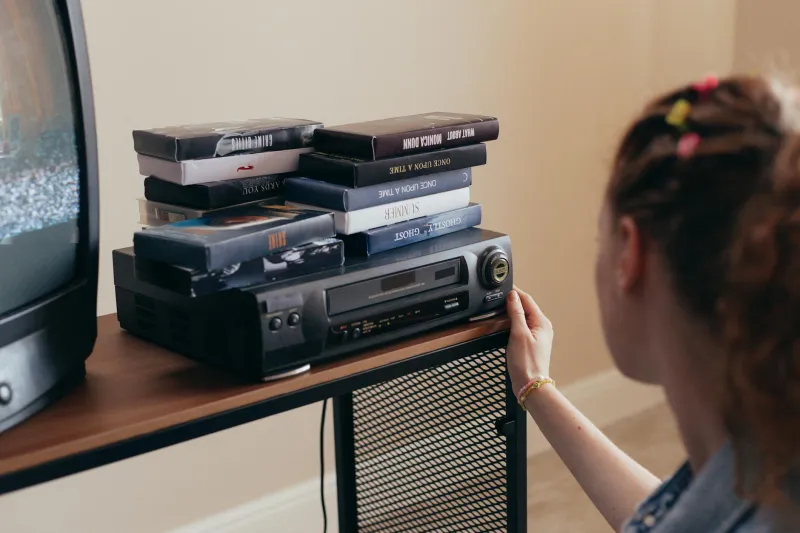
In 1982, Jack Valenti stood before a congressional committee and delivered one of the most memorably hysterical predictions in entertainment history. The Motion Picture Association president compared the humble VCR to a serial killer, declaring that "the VCR is to the American film producer and the American public as the Boston Strangler is to the woman home alone."
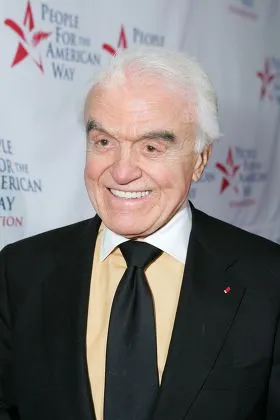 Photo: Jack Valenti, via editorial01.shutterstock.com
Valenti's theatrical warning was just the latest chapter in Hollywood's century-long tradition of predicting its own death at the hands of new technology. Every innovation, from radio to cable TV to the internet, was going to be the industry's final curtain call. Instead, each supposed threat became another revenue stream.
When Radio Was the Villain
Long before anyone worried about home video, Hollywood executives lay awake at night fretting about radio. In the 1920s, studio moguls warned that free entertainment beamed directly into American homes would kill the movie business overnight.
Why would families spend money on movie tickets when they could listen to Jack Benny for free? The logic seemed airtight. Radio offered comedy, drama, music, and news without requiring anyone to leave their living room. Movie theater owners predicted mass bankruptcies. Studio executives prepared for the apocalypse.
Instead, something funny happened: radio made movies more popular. Radio stars became movie stars. Radio shows promoted upcoming films. Radio advertising sold movie tickets. By the 1930s, the supposedly deadly threat had become Hollywood's best marketing partner.
Television: The Real Killer This Time
When television arrived in the late 1940s, Hollywood's panic reached new heights. This wasn't just free entertainment—it was free visual entertainment. Why would Americans ever leave their homes again?
The predictions were dire and specific. Movie theater attendance would collapse within five years. The studio system would crumble by 1955. Television would reduce Hollywood to a wasteland of empty soundstages and unemployed actors.
Darryl F. Zanuck, head of 20th Century Fox, famously declared that "television won't be able to hold on to any market it captures after the first six months. People will soon get tired of staring at a plywood box every night." His confidence was touching, if misplaced.
 Photo: Darryl F. Zanuck, via alchetron.com
Theater owners fought back with gimmicks: 3D movies, Cinerama, "Smell-O-Vision." Anything to differentiate the movie experience from the small screen at home. Some of it worked, most of it didn't, but Hollywood survived anyway.
By the 1960s, the industry had figured out the same lesson it learned with radio: if you can't beat them, join them. Studios started producing content for television. Movie stars appeared on TV shows. Television became another distribution channel, not a replacement medium.
The Cable TV Apocalypse
The 1970s brought a new existential threat: cable television. Now Americans wouldn't just get free broadcast TV—they'd get dozens of channels of premium entertainment delivered directly to their homes. HBO launched in 1972 with recent Hollywood movies, commercial-free. Surely this was the end.
Industry analysts predicted that cable TV would "cannibalize" movie theater attendance. Why pay $3 for a movie ticket when you could watch recent releases at home for a monthly subscription fee? The math seemed obvious.
Except it wasn't. Cable TV created new markets for Hollywood content. Movies had a second life on cable after their theatrical runs. Studios sold licensing deals to cable networks. The "threat" became another profit center.
Home Video: The Boston Strangler Arrives
Which brings us back to Jack Valenti's infamous 1982 testimony. The VCR, he warned Congress, would allow consumers to "copy movies and record them and keep them and sell them and rent them." The entire foundation of the film industry—controlling when and where people could watch movies—was about to crumble.
The studios' legal arguments were creative, if desperate. They claimed that time-shifting television broadcasts (recording shows to watch later) violated copyright law. They warned that a black market in pirated movies would destroy theatrical releases. They predicted that home video would reduce movie-making to an economically unviable hobby.
Congress wasn't buying it. In 1984, the Supreme Court ruled in Sony Corp. v. Universal City Studios that home recording for personal use was legal. Hollywood had lost its legal battle against the VCR.
And then something magical happened: home video became the industry's most profitable business segment. By the 1990s, movies routinely made more money from VHS and DVD sales than from their theatrical releases. The "Boston Strangler" had turned into a golden goose.
The Digital Revolution's False Alarms
The 2000s brought a fresh wave of technological panic. Digital piracy would kill the industry. Streaming services would cannibalize DVD sales. Netflix would destroy movie theaters. Each prediction came with the same apocalyptic certainty as the VCR warnings.
The Motion Picture Association updated Valenti's rhetoric for the internet age. Digital piracy wasn't just theft—it was an "epidemic" that threatened the "survival of American creativity." Congressional hearings featured dire warnings about the death of the film industry at the hands of college students with broadband connections.
Meanwhile, the industry quietly adapted. Studios launched their own streaming services. Digital distribution reduced costs while expanding global reach. Movie theaters survived by offering bigger screens, better sound, and premium experiences that couldn't be replicated at home.
The Pattern Emerges
Looking back over a century of predictions, a clear pattern emerges: Hollywood executives consistently mistake distribution changes for existential threats. Each new technology reshuffles the deck without actually destroying the game.
Radio didn't kill movies—it created movie stars. Television didn't kill movies—it created new revenue streams. Cable didn't kill movies—it extended their commercial life. Home video didn't kill movies—it became their most profitable market.
The industry's survival strategy has remained remarkably consistent: panic publicly, adapt privately, profit eventually.
Today's Familiar Warnings
As this article is written, streaming services are supposedly killing movie theaters. Again. The COVID-19 pandemic accelerated the trend toward home viewing, and industry analysts are issuing familiar warnings about the death of theatrical releases.
The predictions sound remarkably similar to those from 1982, 1952, and 1932: new technology will change consumer behavior, traditional business models will collapse, and the industry will never be the same.
They're probably right about the first two points. Hollywood's business model does change with each technological shift. But the third prediction—that the industry itself will die—has been consistently wrong for a hundred years.
The Undead Industry
Hollywood has now survived radio, television, cable TV, home video, the internet, streaming services, and a global pandemic. Each supposed killer became another tool in the industry's arsenal. Each predicted apocalypse became another profit opportunity.
The entertainment business has proven remarkably resilient, not because it's immune to technological change, but because it's unusually good at adapting to it. Studios that started by fighting new technologies consistently end up embracing them.
Jack Valenti's Boston Strangler comparison has become a punchline, but it perfectly captures Hollywood's relationship with innovation: every new technology looks like a threat until it becomes a business partner. The industry's greatest talent isn't making movies—it's turning existential crises into revenue streams.
A century of crying wolf has taught us one thing: the only constant in the entertainment industry is executives predicting its imminent demise. The movies, meanwhile, keep rolling.