The Great Casino Panic of the 1980s
In 1987, as states across America began eyeing Nevada's gambling revenues with undisguised envy, the moral panic industry kicked into overdrive. Politicians, preachers, and social scientists painted vivid pictures of an America consumed by slot machines, where every corner store would become a mini-casino and every family would be one scratch-off ticket away from financial ruin.
The predictions weren't subtle. They were apocalyptic.
Prophets of Doom in Three-Piece Suits
Lead the charge was a coalition of unlikely bedfellows: conservative religious groups, liberal social workers, and fiscal hawks who normally agreed on nothing except their shared horror at the prospect of legalized gambling spreading beyond the Nevada desert.
The Family Research Council published studies predicting that gambling legalization would trigger "unprecedented social decay." Crime would skyrocket. Divorce rates would explode. Children would go hungry while parents fed quarters to one-armed bandits. Dr. James Dobson warned his radio listeners that America stood "on the precipice of moral catastrophe."
Not to be outdone, the National Coalition Against Legalized Gambling painted even more colorful scenarios. Their congressional testimony described a dystopian future where gambling addiction would "sweep across the heartland like a prairie fire," leaving broken families and bankrupt communities in its wake.
Even academics got in on the action. Sociology professors published papers with titles like "The Coming Casino Society" and "Gambling's Inevitable Expansion into American Life." They predicted that once states opened the gambling floodgates, there would be no closing them. Every strip mall would sprout slot machines. Every gas station would become a betting parlor.
The Domino Theory of Dice
The anti-gambling prophets had a particularly creative theory about how the moral collapse would unfold. It started with state lotteries—seemingly innocent scratch-off tickets that would "normalize gambling behavior" among previously respectable citizens. Next would come casinos, first on Indian reservations, then in urban "entertainment districts," and finally scattered across suburban America like Starbucks.
The endgame? A nation where gambling was so pervasive that children would grow up thinking slot machines were as normal as vending machines. Where families would budget for lottery tickets the way they budgeted for groceries. Where the American work ethic would be replaced by get-rich-quick fantasies.
Reverend Tom Grey, leader of the National Coalition Against Legalized Gambling, toured the country in the 1990s delivering speeches that read like Old Testament prophecy. "We are witnessing the systematic destruction of the American family through state-sanctioned gambling," he thundered. "Mark my words: within twenty years, you will not be able to buy gas, groceries, or a cup of coffee without being confronted by gambling opportunities."
Meanwhile, in Reality
As state after state legalized various forms of gambling throughout the 1990s and 2000s, something funny happened: most of them just collected the tax revenue and moved on to arguing about other things.
New Jersey legalized casino gambling in Atlantic City in 1976. Instead of becoming a moral wasteland, the state used gambling revenues to fund senior citizen programs and property tax relief. Crime rates in Atlantic City were certainly a problem, but they were a problem before the casinos arrived.
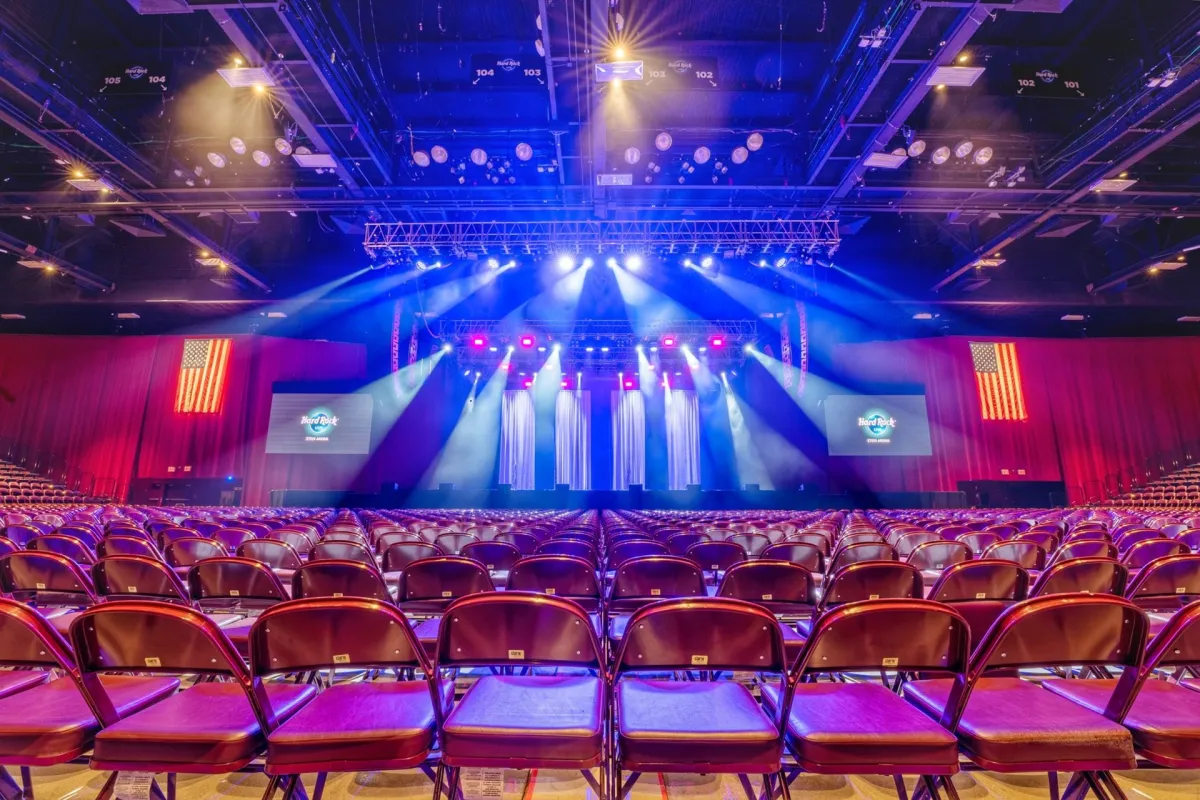 Photo: Atlantic City, via thevendry.com
When Iowa legalized riverboat gambling in 1989, the predicted social catastrophe never materialized. The boats attracted tourists, generated tax revenue, and provided jobs. Most Iowans continued to be far more interested in corn prices than craps tables.
State after state followed the same pattern. Mississippi legalized casino gambling in 1990. Louisiana in 1991. Illinois in 1990. Each time, the moral guardians issued dire warnings. Each time, life went on pretty much as before, except with more tax revenue.
The Internet Panic 2.0
Just when it seemed like the gambling apocalypse predictions might fade away, the internet arrived to give moral panic a second wind. Online gambling, the new prophets warned, would be infinitely worse than physical casinos. At least you had to drive to Atlantic City to lose your mortgage payment. Now you could do it from your kitchen table at 3 AM.
Congressman Bob Goodlatte warned that internet gambling would "bring the casino into every home, office, and dorm room." The National Council on Problem Gambling published studies suggesting that online gambling would create "unprecedented levels of addiction," particularly among young people who had grown up with computers.
The predictions grew more elaborate. Children would stumble across gambling sites while doing homework. Credit card companies would be overwhelmed by gambling debt. The entire banking system would be destabilized by online casino losses.
Congress responded by passing the Unlawful Internet Gambling Enforcement Act in 2006, effectively banning online gambling nationwide. The moral guardians had won—temporarily.
The Quiet Revolution
While politicians and preachers were busy predicting the end of civilization, something more interesting was happening: most Americans were proving remarkably resistant to gambling addiction. Studies consistently showed that roughly 85% of adults who gambled did so recreationally, spending modest amounts they could afford to lose.
The predicted explosion in problem gambling never materialized on the scale the prophets had warned about. Yes, gambling addiction is a real problem affecting a small percentage of the population. But it turned out to be roughly the same small percentage whether gambling was legal or illegal.
Meanwhile, states that legalized gambling discovered something the moral panic crowd hadn't anticipated: gambling revenue was nice, but it wasn't transformative. Most states used it to fund specific programs—education, parks, senior services—but it rarely represented more than a few percentage points of total state revenue.
The Sports Betting Sequel
The cycle repeated itself perfectly when the Supreme Court struck down the federal ban on sports betting in 2018. Once again, the moral guardians issued dire warnings about the corruption of American sports and the gambling addiction epidemic that would surely follow.
Once again, state after state legalized sports betting, collected the tax revenue, and moved on to other issues. Young people, it turned out, were far more interested in fantasy football than actually betting on real football.
The Prophets' Scorecard
Fifty years after the great gambling panic began, America has indeed become a nation where gambling is widely legal and easily accessible. You can buy lottery tickets at gas stations, bet on sports from your phone, and visit casinos in 40 states.
And yet, somehow, the republic endures. Families still eat dinner together. Children still go to school. The work ethic hasn't collapsed under the weight of get-rich-quick fantasies.
The moral guardians weren't entirely wrong—they correctly predicted that gambling would become normalized and widespread. They just wildly overestimated how much most Americans would care. Turns out we're a nation that likes to have the option to gamble, but we're not particularly interested in gambling away our lives.
The real transformation wasn't moral—it was bureaucratic. America didn't become a nation of gamblers. We became a nation that treats gambling like any other regulated industry: tax it, monitor it, and argue about something else.
 Photo: Las Vegas, via www.fontainebleaulasvegas.com