Edison's Electric Dreams
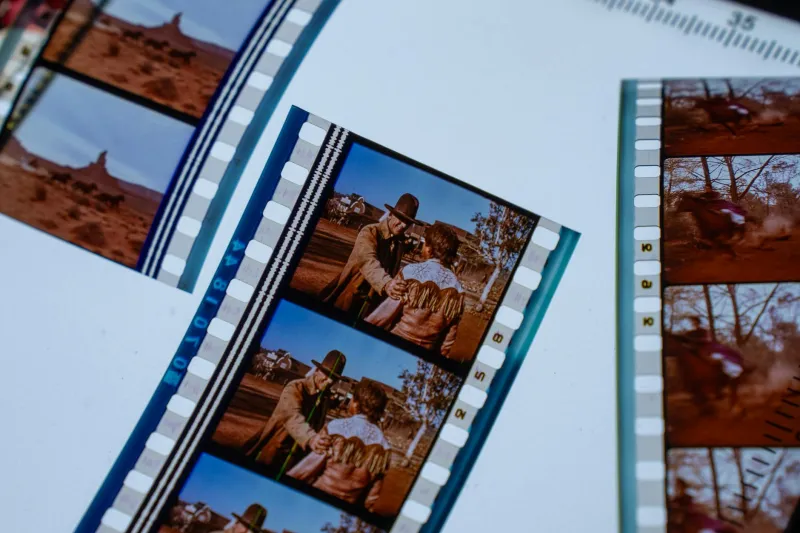
In 1913, Thomas Edison gazed into his crystal ball and saw the future of American education. "Books," he declared with the confidence of a man who'd just invented the light bulb, "will soon be obsolete in the schools." The culprit? Motion pictures. Edison was convinced that educational films would revolutionize learning so completely that traditional classrooms would become museums.
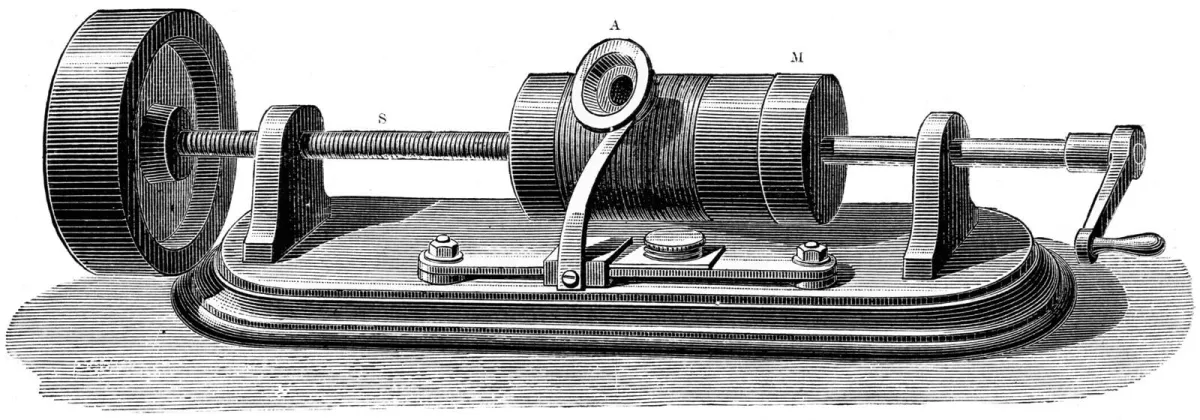 Photo: Thomas Edison, via cdn.britannica.com
"Our school system will be completely changed in the next ten years," Edison predicted, apparently unaware that American public education changes about as quickly as continental drift.
Edison wasn't just making wild guesses — he was betting serious money on his vision. His company produced hundreds of educational films, each one supposedly another nail in the coffin of chalk-and-blackboard teaching. Students would learn everything from geography to chemistry by watching moving pictures, making teachers about as necessary as buggy whip manufacturers.
The only problem? Teachers turned out to be surprisingly difficult to replace.
Radio's Revolutionary Moment
When Edison's film revolution fizzled, America's educational futurists didn't give up — they just found a new technological savior. Radio was going to transform learning by beaming lessons directly into every classroom across the nation.
In the 1920s and 1930s, educational radio programs proliferated like wildfire. Students gathered around crackling receivers to hear lessons broadcast from distant studios, while educational experts proclaimed the dawn of a new era. Why hire expensive teachers when you could have the nation's best instructors speak directly to students via radio waves?
The Wisconsin School of the Air became a model for the future, broadcasting lessons to rural schools that couldn't afford qualified teachers. Educational visionaries saw radio as the great equalizer — finally, every American child could receive the same high-quality instruction, regardless of geography or local funding.
Naturally, radio was going to make traditional teachers obsolete within a decade. Naturally, it didn't.
Television's Teaching Revolution
By the 1950s, radio looked as quaint as Edison's films. Television was the real game-changer, and educational experts were ready to bet the farm on it. This time, they really meant it — TV would revolutionize American education so completely that the traditional classroom would become a relic.
Educational television promised to bring the world's greatest teachers into every home and school. Why settle for your local high school's chemistry teacher when you could learn from Nobel Prize winners beamed directly from university studios?
The Ford Foundation poured millions into educational television programming. Shows like "Continental Classroom" offered college-level courses to anyone with a TV set. Educational experts predicted that by 1970, most formal instruction would happen via television, with human teachers reduced to glorified discussion leaders.
Chicago even experimented with "Television College," where students could earn degrees by watching lectures on TV and mailing in assignments. The future had arrived, and it had rabbit ears.
Except, once again, teachers proved remarkably resistant to technological unemployment.
The Computer Classroom Takeover
The 1960s brought a new prophet of educational transformation: Patrick Suppes, a Stanford professor who looked at early computer terminals and saw the end of traditional teaching. "The computer terminal," he declared in 1966, "will be as common in the home as the television set."
Suppes wasn't just predicting computers in classrooms — he was predicting the complete transformation of how Americans learned. Computer-assisted instruction would be so effective, so personalized, so superior to human teaching that traditional schools would become obsolete.
"In a few more years," Suppes announced with academic certainty, "millions of school children will have access to what Philip of Macedon's son Alexander enjoyed as a royal prerogative: the personal services of a tutor as well-informed and responsive as Aristotle."
The vision was intoxicating: every student with a personal electronic Aristotle, learning at their own pace, freed from the constraints of human teachers with their limited knowledge and inability to work 24/7.
Educational technology companies sprouted like mushrooms after rain, each promising to deliver Suppes' vision. Computer terminals appeared in schools across America, running drill-and-practice programs that were supposed to make human instruction obsolete.
Spoiler alert: Aristotle kept his job.
The CD-ROM Revolution That Wasn't
The 1990s brought multimedia computing, and with it, a fresh wave of "teachers are doomed" predictions. CD-ROMs could store entire encyclopedias, complete with video, audio, and interactive elements. Educational software companies promised that multimedia learning would finally deliver on technology's century-old promise to transform education.
Encarta was going to replace textbooks. Interactive CD-ROMs would make lectures obsolete. Students would learn everything from ancient history to advanced calculus through immersive multimedia experiences that no human teacher could match.
Educational experts proclaimed the arrival of "edutainment" — learning so engaging and effective that traditional instruction would seem as primitive as cave paintings. Why listen to Mrs. Smith explain photosynthesis when you could interact with a 3D plant cell that responded to your every click?
The revolution was so certain that education schools began preparing teachers for their new role as "learning facilitators" rather than instructors. The age of the sage on the stage was ending; the age of the guide on the side had begun.
Except Mrs. Smith kept showing up to work every day, and students kept needing actual human beings to explain why photosynthesis mattered.
The Internet Changes Everything (For Real This Time)
When the internet exploded in the late 1990s, educational futurists were ready with their boldest predictions yet. This wasn't just another technology — this was the ultimate teaching machine. The sum of human knowledge would be available instantly, making traditional teachers as obsolete as telegraph operators.
Distance learning would democratize education. Online courses would replace physical classrooms. Students would learn from the world's best instructors via streaming video, making local teachers unnecessary middlemen in the educational process.
The dot-com boom produced dozens of educational startups, each promising to revolutionize learning through internet technology. Venture capitalists threw money at companies that claimed they could replace teachers with algorithms, chatbots, and personalized learning systems.
When the dot-com bubble burst, so did most of these educational revolutions. But the dream lived on.
MOOCs: The Final Solution
By 2010, educational technology had evolved into MOOCs — Massive Open Online Courses. Stanford professor Sebastian Thrun looked at his online artificial intelligence course, which attracted 160,000 students worldwide, and declared victory over traditional education.
 Photo: Sebastian Thrun, via 9to5google.com
"In 50 years," Thrun announced, "there will be only 10 institutions in the world delivering higher education."
MOOCs were going to democratize education so completely that physical universities would become obsolete. Why pay thousands of dollars to sit in lecture halls when you could learn from world-class professors for free online?
Venture capital poured into MOOC companies. Coursera, edX, and Udacity raised hundreds of millions of dollars to build the educational platforms that would finally make human teachers obsolete.
The hype was so intense that Time magazine declared 2012 "The Year of the MOOC." Educational experts predicted that traditional colleges would be bankrupt within a decade, unable to compete with free, high-quality online alternatives.
The Pandemic Plot Twist
Then 2020 happened, and suddenly every American student was learning online whether they wanted to or not. After a century of predictions about technology replacing teachers, the great remote learning experiment finally arrived.
The results were... less than revolutionary.
Students struggled with focus. Parents discovered that teaching their own children was harder than it looked on YouTube. Test scores plummeted. Mental health suffered. The great technological transformation of education looked a lot like educational chaos.
Teachers, it turned out, did more than just deliver information — they motivated, inspired, disciplined, and cared for students in ways that no algorithm could replicate. The human element that educational futurists had been trying to eliminate for a century proved to be irreplaceable.
The Eternal Return
Today, as artificial intelligence promises to revolutionize education once again, the cycle continues. ChatGPT and other AI tools are being hailed as the final technological solution to educational challenges. Personalized AI tutors will adapt to every student's learning style, making human teachers as obsolete as... well, as every previous technology was supposed to make them.
Educational experts are already predicting the end of traditional teaching, just as their predecessors did with films, radio, television, computers, CD-ROMs, the internet, and MOOCs.
Meanwhile, across America, teachers are showing up to work, writing on whiteboards, grading papers, and doing the impossibly complex work of actually educating human beings.
The prophets of educational technology have been wrong for over a century, but they keep making the same prediction with the same confidence: this time, technology really will replace teachers.
Somehow, Mrs. Johnson doesn't seem worried.