When America's Atomic Dreamers Promised to Delete Your Electric Bill Forever
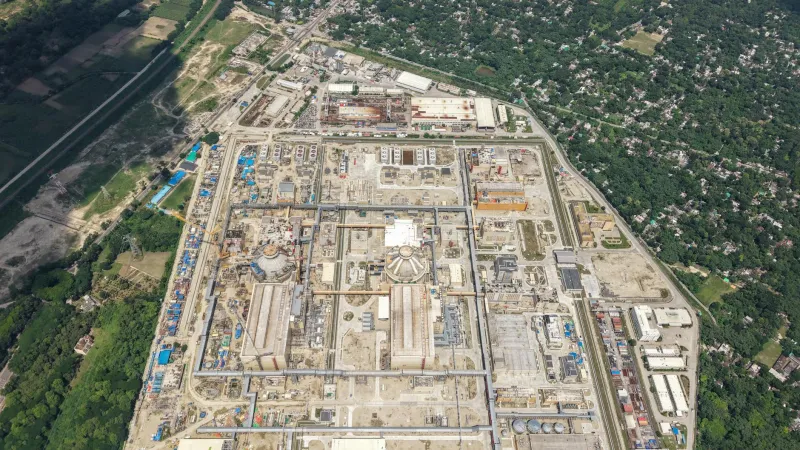
The Golden Age of Nuclear Wishful Thinking
Picture this: It's 1954, and Lewis Strauss, chairman of the Atomic Energy Commission, steps up to a microphone and delivers what might be the most expensive four words in American energy history: "too cheap to meter." He wasn't talking about some distant sci-fi fantasy—he was talking about nuclear power making your electric bill disappear by 1980. Maybe 1985, tops.
The man wasn't alone in his atomic optimism. Across America, engineers in thick-rimmed glasses were sketching out a future where splitting uranium atoms would power everything from your toaster to entire flying cities. Popular Science magazines flew off the shelves with breathless articles about nuclear-powered cars, planes, and—naturally—nuclear-powered coffee makers. Because nothing says "morning joe" like a dash of enriched uranium.
When Math Meets Marketing
The logic seemed bulletproof at the time. Nuclear fuel contained millions of times more energy than coal or oil. Surely, once you built the reactor, the electricity would practically flow for free, right? Utility executives nodded along, politicians made grand speeches, and Americans started mentally spending all that money they'd save on electric bills.
General Electric ran ads showing nuclear plants as sleek, futuristic monuments to human ingenuity. Westinghouse promised reactors so safe and efficient that they'd make coal plants look like steam engines. Even Disney got in on the action, with "Our Friend the Atom" explaining to children how nuclear power would solve all of humanity's problems—except maybe what to do with all that leftover radioactive waste, but hey, details.
The promotional materials were nothing if not ambitious. Nuclear power wouldn't just make electricity cheap—it would end poverty, desalinate oceans, power massive greenhouse complexes in the Arctic, and probably cure the common cold while it was at it. One particularly enthusiastic report suggested that nuclear energy would make aluminum so cheap that we'd build entire cities out of the stuff.
Reality Checks Its Watch
Then came the 1970s, and reality decided to crash the atomic party with some uninvited guests: cost overruns, construction delays, and safety concerns that just wouldn't go away.
Turns out, building nuclear reactors is like renovating your kitchen, except the kitchen costs $10 billion, takes fifteen years to finish, and occasionally threatens to irradiate the neighborhood. Those "simple" reactor designs from the 1950s evolved into engineering marvels so complex that they required their own zip codes.
The Shoreham Nuclear Power Plant on Long Island became a $6 billion monument to atomic ambition—it was completed, tested, and then immediately shut down without ever producing a single kilowatt-hour of commercial electricity. The locals weren't thrilled about having a nuclear plant in their backyard, especially after Three Mile Island reminded everyone that "atoms for peace" sometimes had anger management issues.
The Bill Comes Due
By 1980—the year nuclear power was supposed to make electricity free—the average American household was paying more for electricity than ever before. Nuclear plants that were supposed to cost $100 million were coming in at $1 billion. Construction schedules that promised five years were stretching into decades.
The industry that was going to make electricity too cheap to meter instead made it expensive enough that utilities started sending customers detailed monthly statements just to justify the charges. Those flying cities powered by atomic energy? Still grounded. Nuclear-powered cars? Still stuck in traffic, burning gasoline like everyone else.
Meanwhile, the waste problem that everyone had waved off as a minor detail turned out to be a major headache lasting thousands of years. Turns out, storing radioactive material safely is slightly more complicated than keeping leftovers in the fridge.
The Prophets' Report Card
To be fair to our atomic optimists, they weren't entirely wrong. Nuclear power did become a significant source of electricity in America, providing about 20% of the nation's power. Modern nuclear plants are marvels of engineering that can run for decades with minimal fuel.
But free electricity? Not so much. The average American household now pays around $120 a month for electricity—not exactly what Lewis Strauss had in mind when he promised power too cheap to meter. Those nuclear plants that were supposed to pay for themselves in a few years are still sending bills to ratepayers decades later.
The Atomic Legacy
The nuclear dreamers of the 1950s weren't charlatans or fools—they were genuinely brilliant people who believed they were on the verge of solving humanity's energy problems forever. They just happened to be spectacularly wrong about the economics, the politics, and the public's willingness to live next door to a nuclear reactor.
Today, as we grapple with climate change and energy security, some of those atomic dreams are getting a second look. Modern reactor designs promise to be safer, cheaper, and more efficient than their 1950s predecessors. But this time, the boosters are being a bit more careful with their promises.
After all, Americans are still waiting for that free electricity they were promised seventy years ago. And judging by the monthly electric bill that keeps showing up in the mailbox, they're going to be waiting a while longer.